




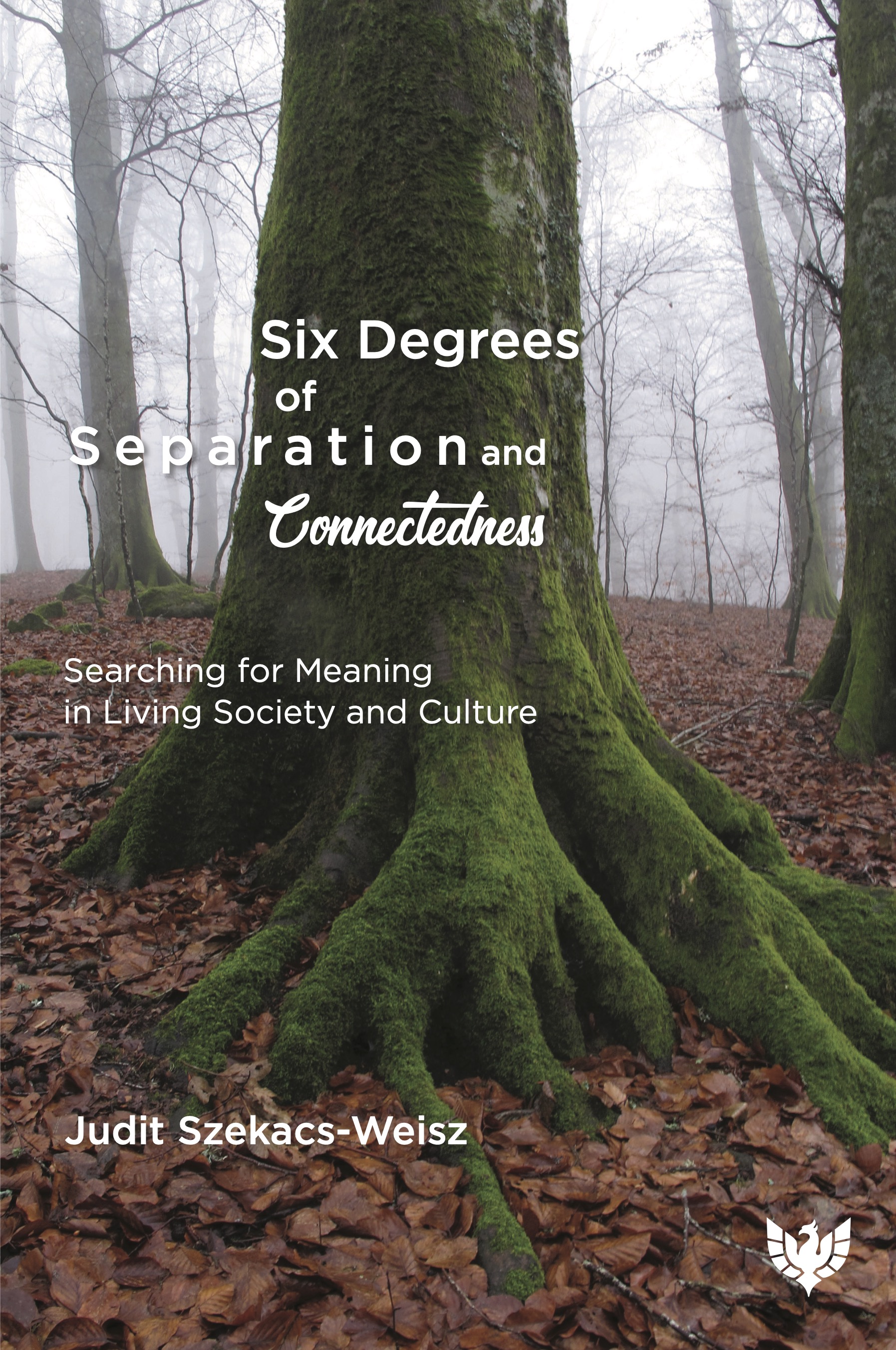
Six Degrees of Separation and Connectedness: Searching for Meaning in Living Society and Culture
Book Details
- Publisher : Karnac Books
- Published : September 2026
- Cover : Paperback
- Pages : 150
- Category :
Psychoanalysis - Category 2 :
Forthcoming - Catalogue No : 98634
- ISBN 13 : 9781800134614
- ISBN 10 : 1800134614
Also by Judit Szekacs-Weisz

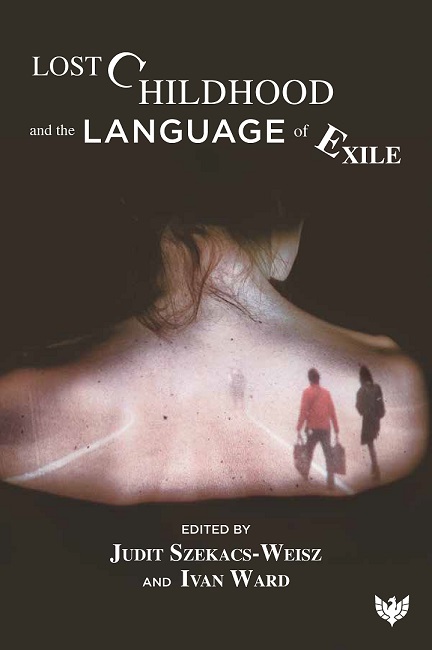
Sandor Ferenczi - Ernest Jones: Letters 1911-1933
Price £32.99
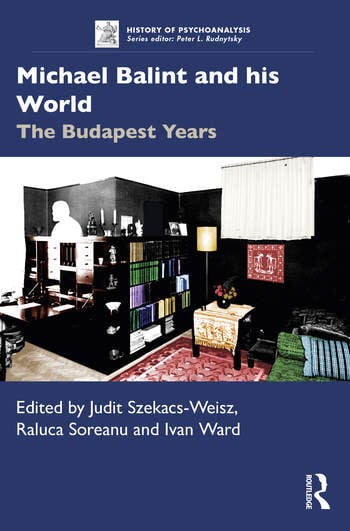
Michael Balint and His World: The Budapest Years
Price £30.99
save £4.40
Free UK Delivery over £25



There are currently no reviews
Be the first to review

How far do we have to go to find our own voice? How is the texture of one’s existential, intellectual, and emotional life woven together? Judit Szekacs-Weisz addresses these and many other questions as she embarks on a discovery of the true meaning of identity and the impact of historical, cultural, and social events on the individual.
Judit Szekacs-Weisz brings us a collection of her papers that she places into the context of her personal narrative, exposing the unknown and surprising alongside the familiar. She explores the many facets of survival, fairy tales, art, dreams, trauma, family secrets, memory, migration, and the lessons we learn from history. She opens our eyes to the experiences of the ‘foreigner’ learning about new cultures and languages and their exposure to otherness and shame. How working in a “second” language gives an acute sensitivity to the many layers of the spoken and written word. How fairy tales allow us to move between reality and fantasy to open up a deeper emotional and societal layer for exploration. How dreams open a door to our unconscious and wider society. How past generations impact on the present-day. The effects of migration, a topic that echoes ever stronger today. The book interweaves new and published papers with musings and reconnections to earlier ideas that take the reader on a journey through the past to the present and future. It helps build a rounded conception of reality at a time where it is harder to know what is real and what is not. The book is strengthened by a selected bibliography which features many authors not known in the “Western” professional discourse.
Six Degrees of Separation and Connectedness: Searching for Meaning in Living Society and Culture is the ideal book for those looking to gain greater understand of who we are, what shapes us, and how we connect to others.
Reviews and Endorsements
‘‘The felicitous title of this book emphasises major characteristics of Ferenczi’s work from 1897 to 1933: connectedness to outer and inner realities, and communication within both. Judit Szekacs-Weisz, an emigrant psychoanalyst, in her poetic language, incorporates lessons from history, the shadow of the Holocaust, the regime changes in Hungary, art, dreams, and rich clinical examples about owning one’s voice. This excellent, contemplative book opens hidden meanings about trauma, healing, identity, and the importance of cultural influences, and offers unique perspectives to the reader.’
Giselle Galdi, Editor-in-Chief Emeritus, American Journal of Psychoanalysis
‘This book is an émigré’s bundle. It consists of both cherished items, and traces of what has been lost and left behind. Judit Szekacs-Weisz explores exilic questions of identity and assimilation; parallel testing of external and psychic reality. Failed attempts to rebuild continuity. Disturbing experiences of otherness and shame. An outcast’s inability to mourn loss of the original culture. Self-protective voicelessness among refugees whose mother tongue is “poisoned”. Toddler-like language acquisition, painfully reduced competence and social bewilderment when natural orientation is shattered, rendering basic assumptions obsolete. Some chapters focus on the decisive formative factors, collective psychological defences and particular strategies of survival among migrants from totalitarian states where the propagandised rewriting of history condemns whole nations and several generations to cumulative traumatisation of unprocessed transformations. Interwoven throughout the book are nuggets from the author’s experience as founder of a multilingual therapeutic organisation. She has a keen appreciation of the specific challenges faced by immigrant clinicians and patients alike when undertaking talking therapies in a foreign language.’
Joan Raphael-Leff, PhD, (Retired) Fellow of the British Psychoanalytical Society
‘To read Judit’s book is to be invited not just into a dialogue with its papers, but into the dialogue between them, as themes emerge, are elaborated upon, and cross-fertilise each other in an enriching hermeneutic circle.’
Ken Robinson, from the Foreword
Table of Contents
About the author
Preface by Kate Pearce
Foreword by Ken Robinson
Introduction
Part I: Strategies of survival and staying alive
1. How to become a bilingual psychoanalyst?
2. Survival strategies—a psychoanalytic view
3. Metamorphoses
Part II: Looking at fairy tales, art, and dreams
4. Return of the fairy tale: Harry Potter—a story of traumatised generations
5. Borrowed identities
6. Social dreaming: A paradox accepted
7. My twentieth century
8. Singing colours, whispering shadows, painted dreams
Part III: Lessons from history
9. Lost children of the recent history of psychoanalysis: Tibor Rajka MD, 1901–1980
10. Introduction to Sándor Ferenczi—Ernest Jones: Letters 1911–1933
11. The Living Archives Project
Part IV: Back to real time
12. Emigration from within
13. Mindless bodies—bodyless minds: Free associations around the topic of reality
14. Covid chronicles by a psychoanalyst: External and psychic reality in the time of lockdown
Postscript
References and bibliography
Index
About the Author(s)
Judit Szekacs-Weisz is a bilingual psychoanalyst and psychotherapist. Born and educated (mostly) in Budapest, Hungary, she has taken in the way of thinking and ideas of Ferenczi, the Balints, Hermann, and Rajka as an integral part of a “professional mother tongue”. She is a founding member of the Sandor Ferenczi Society, Budapest. The experience of living and working in a totalitarian regime and the transformatory years leading to the fall of the Berlin Wall sensitised her to the social and individual aspects of trauma, identity formation, and strategies of survival. In 1990, she moved to London, where, with a small group of psychoanalysts, therapists, artists, and social scientists, she founded Imago East West and later the Multilingual Psychotherapy Centre (MLPC) to create a space where diverse experiences of living and the changing context and language in different cultures can be explored and creative solutions found. She writes about body-and-mind, trauma, emigration, changing context, and social dreaming.
Customer Reviews
Our customers have not yet reviewed this title. Be the first add your own review for this title.
You may also like

Bluebird: The Place of Death and Fear of Dying in My Long, Good Life
Andrew Cooper
Price £15.99
save £4.00
Axioms of Mind and Lived Experience: On Character and the Assumed
Christopher Bollas
Price £19.99
save £5.00