




Psychoanalysis Books

Changing Sexualities and Parental Functions in the Twenty-First Century
Recent societal changes have challenged long-established concepts in psychoanalysis, including the Oedipus complex, parental functions, and male and female psychosexuality. ‘Postmodern families’,... (more)
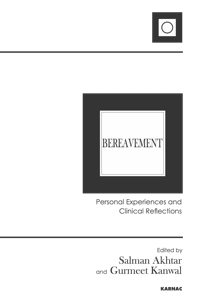
Bereavement: Personal Experiences and Clinical Reflections
This is a book about death, loss, grief and mourning, but with an unusual twist. It is different in that it explores specific kinds of deaths encountered within families and households, rather than... (more)

Mistrust: Developmental, Cultural, and Clinical Realms
Humans are weak. Lacking the claws and thick skins of other animals, we are forced to rely on members of our own species to survive and flourish in the world. The fact that the human infant is born... (more)

Balint Matters: Psychosomatics and the Art of Assessment
This book explores the life and theories of Michael Balint, who kept alive Ferenczi’s analytic traditions in Budapest and brought them to London, where they became a vital part of the Independent... (more)

Migration Trauma, Culture, and Finding the Psychological Home Within: Views From British Object Relations Theory
Migration Trauma, Culture, and Finding the Psychological Home Within is an in-depth study of Eastern European migration to the United States. In presenting the clinical case studies of Eastern... (more)

Future Psychoanalysis: Toward a Psychology of the Human Subject
A crisis in psychoanalysis has been developing since the 1970s, manifesting in a gradual but persistent loss of patients and young mental health providers in psychoanalytic training and therapy. In a... (more)

Freud's Other Theory of Psychoanalysis: The Replacement for the Indelible Theory of Catharsis
Freud's Other Theory of Psychoanalysis: The Replacement for the Indelible Theory of Catharsis argues that Freud's familiar theory of psychoanalysis is an elaboration of his catharsis theory. Although... (more)

Facing Cancer and the Fear of Death: A Psychoanalytic Perspective on Treatment
In Facing Cancer and the Fear of Death: A Psychoanalytic Perspective on Treatment, Dr Norman Straker proposes that death anxiety is responsible for the American society's failure to address costly... (more)

The Clinical Problem of Masochism
The problem of how to understand and to treat masochism has plagued the vast majority of clinicians. The Clinical Problem of Masochism focuses on the common and difficult clinical problems posed by... (more)

Consciousness and the Aconscious in Psychoanalytic Theory
In the last few decades consciousness has become a major topic of interest for neurologists, psychologists, and a host of other professionals in various disciplines. Their concerted efforts to define... (more)

How Talking Cures: Revealing Freud's Contributions to All Psychotherapies
Sigmund Freud repeatedly revised his understanding of how our minds work, how to understand mental illness, and how to relieve emotional, psychological suffering. With each revision, however, he did... (more)

Losing Your Head: Abjection, Aesthetic Conflict, and Psychoanalytic Criticism
Losing Your Head: Abjection, Aesthetic Conflict, and Psychoanalytic Criticism looks at the subject of beheading in art as a trope of the destruction of the mind. This book discusses both... (more)

Phantom Narratives: The Unseen Contributions of Culture to Psyche
In Phantom Narratives: The Unseen Contributions of Culture to Psyche, Samuel Kimbles explores collective shadow processes, intergenerational transmission of group traumas, and social suffering as... (more)

Freud's Theory of Dreams: A Philosophico-Scientific Perspective
Freud's Theory of Dreams: A Philosophico-Scientific Perspective evaluates Freud's theory of dreams in light of the many philosophical and scientific criticisms that have been brought against it.... (more)
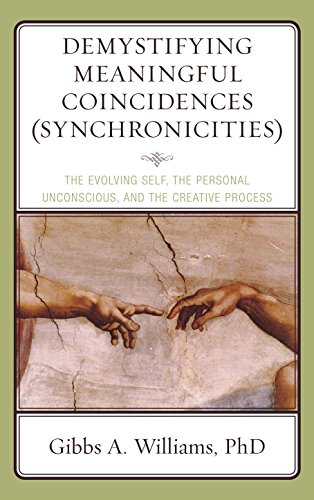
Demystifying Meaningful Coincidences (Synchronicities): The Evolving Self, the Personal Unconscious, and the Creative Process
Demystifying Meaningful Coincidences (Synchronicities): The Evolving Self, the Personal Unconscious, and the Creative Process offers an original theory of the nature of meaningful coincidences... (more)
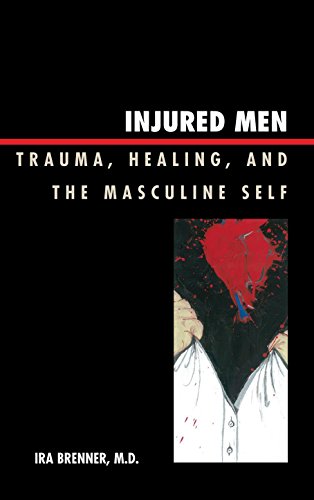
Injured Men: Trauma, Healing, and the Masculine Self
Winner of the 2010 Gradiva Award, Injured Men is a unique casebook of clinical material pertaining to men who have sustained trauma. With the exception of those publications dealing with the... (more)

War is Not Inevitable: On the Psychology of War and Aggression
In 1932 Einstein asked Freud, 'Is there any way of delivering mankind from the menace of war?' Freud answered that war is inevitable because humans have an instinct to self-destroy, a death instinct... (more)
Echoism: The Silenced Response to Narcissism
This book introduces the importance of Echoism as both a clinical entity and a theoretical concept. In Ovid's version of the myth of Echo and Narcissus, the character Echo receives equal attention to... (more)

Critical Flicker Fusion: Psychoanalysis at the Movies
The premise of this book is that films, like other works of the imagination, may be elucidated by applying methods derived from psychoanalysis, and that doing so will result in a deeper and richer... (more)

The Courage to Fight Violence Against Women: Psychoanalytic and Multidisciplinary Perspectives
In recent years there has been a surge in awareness of the many arenas in which violence against women occurs. There is a growing attention to human and sex trafficking and femicide throughout the... (more)

Meltzer in Sao Paulo
This book is one of a series that record Donald Meltzer’s clinical seminars and supervisions, which were conducted in various countries on a regular basis over many years. Despite his interest in the... (more)
Sadism: Psychoanalytic Developmental Perspectives
Voyeuristic sadism as a form of entertainment seems to be on the rise, the increase corresponding with an upsurge in public appetite for sadomasochism as a recreational activity. Over the last... (more)

On Loving, Hating, and Living Well: The Public Psychoanalytic Lectures of Ralph R. Greenson
Ralph R. Greenson, MD, was perhaps psychoanalysis's most gifted and eloquent spokesperson. In this volume Dr Greenson is presented in one of the roles he enjoyed most: communicating to a lay audience... (more)

The Technique and Practice of Psychoanalysis: Volume I
This systematic and comprehensive volume, written in a lively and clear style, is devoted essentially to the fundamentals of psychoanalytic technique: transference and resistance. Dr. Greenson... (more)

Writing on the Moon: Stories and Poetry from the Creative Unconscious by Psychoanalysts and Others
This innovative book offers a collection of creative writings by psychotherapists – poems, short stories, and creative non-fiction. The
themes tap into our most passionate and spontaneous selves,... (more)

Guilt: Origins, Manifestations, and Management
Guilt: Origins, Manifestations, and Management is replete with clinical pearls and highly useful tips for the management of patients driven by feelings of guilt and remorse. Eight distinguished... (more)

Human Goodness: Origins, Manifestations, and Clinical Implications
Human Goodness: Origins, Manifestations, and Clinical Implications focuses on the positive attributes that exist in each human heart. In this volume eight distinguished clinicians elucidate the... (more)

The Work of Psychoanalysis: Sexuality, Time and the Psychoanalytic Mind
Psychoanalysts working in clinical situations are constantly confronted with the struggle between conservative forces and those which enable something new to develop. Continuity and change, stasis... (more)

Reclaiming Unlived Life: Experiences in Psychoanalysis
In Reclaiming Unlived Life, influential psychoanalyst Thomas Ogden uses rich clinical examples to illustrate how different types of thinking may promote or impede analytic work. With a unique style... (more)

Radical Psychoanalysis: An Essay on Free-Associative Praxis
Only by the method of free-association could Sigmund Freud have demonstrated how human consciousness is formed by the repression of thoughts and feelings that we consider dangerous. Yet today most... (more)