




Salman Akhtar
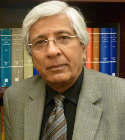
Salman Akhtar, MD, is professor of psychiatry at Jefferson Medical College and a training and supervising analyst at the Psychoanalytic Center of Philadelphia. He has served on the editorial boards of the International Journal of Psychoanalysis and the Journal of the American Psychoanalytic Association. His more than 450 publications include 120 books, of which the following twenty-three are solo-authored – Broken Structures (1992), Quest for Answers (1995), Inner Torment (1999), Immigration and Identity (1999), New Clinical Realms (2003), Objects of Our Desire (2005), Regarding Others (2007), Turning Points in Dynamic Psychotherapy (2009), The Damaged Core (2009), Comprehensive Dictionary of Psychoanalysis (2009), Immigration and Acculturation (2011), Matters of Life and Death (2011), Psychoanalytic Listening (2013), Good Stuff (2013), Sources of Suffering (2014), No Holds Barred (2016), A Web of Sorrow (2017), Mind, Culture, and Global Unrest (2018), Silent Virtues (2019), Tales of Transformation (2022), In Leaps and Bounds (2022), and In Short (2024) – as well as sixty-nine edited or coedited volumes in psychiatry and psychoanalysis. Dr. Akhtar has delivered many prestigious addresses and lectures including, most significantly, the inaugural address at the first IPA-Asia Congress in Beijing, China (2010). Dr. Akhtar is the recipient of the Journal of the American Psychoanalytic Association’s Best Paper of the Year Award (1995), the Margaret Mahler Literature Prize (1996), the American Society of Psychoanalytic Physicians’ Sigmund Freud Award (2000), the American College of Psychoanalysts’ Laughlin Award (2003), the American Psychoanalytic Association’s Edith Sabshin Award (2000), Columbia University’s Robert Liebert Award for Distinguished Contributions to Applied Psychoanalysis (2004), the American Psychiatric Association’s Kun Po Soo Award (2004), the Irma Bland Award for being the Outstanding Teacher of Psychiatric Residents in the country (2005), and the Nancy Roeske Award (2012). He received the Sigourney Award (2013), which is the most prestigious honor in the field of psychoanalysis. Dr. Akhtar is an internationally sought speaker and teacher, and his books have been translated in many languages, including German, Turkish, and Romanian. His interests are wide and he has served as the film review editor for the International Journal of Psychoanalysis, and is currently serving as the book review editor for the International Journal of Applied Psychoanalytic Studies. He has published eighteen collections of poetry and serves as a scholar-in-residence at the Inter-Act Theatre Company in Philadelphia. His Selected Papers (Vols I–X) were recently published and released at a festive event held at the Freud House & Museum in London.
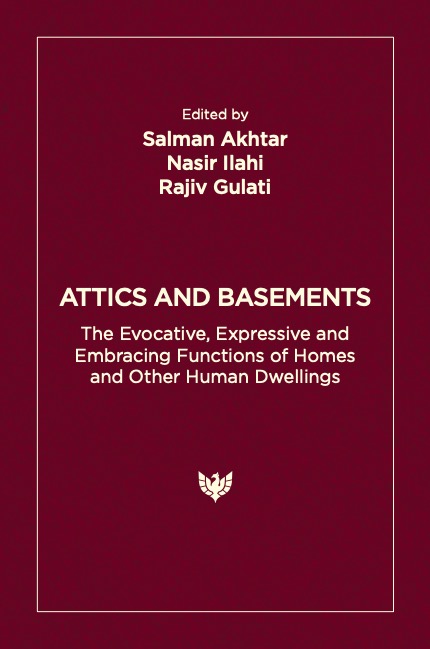
Attics and Basements: The Evocative, Expressive and Embracing Functions of Homes and Other Human Dwellings
Attics and Basements investigates all manner of homes. Its approach is fundamentally psychoanalytic but borrows significantly from anthropology, history, architecture, religion, and general... (more)
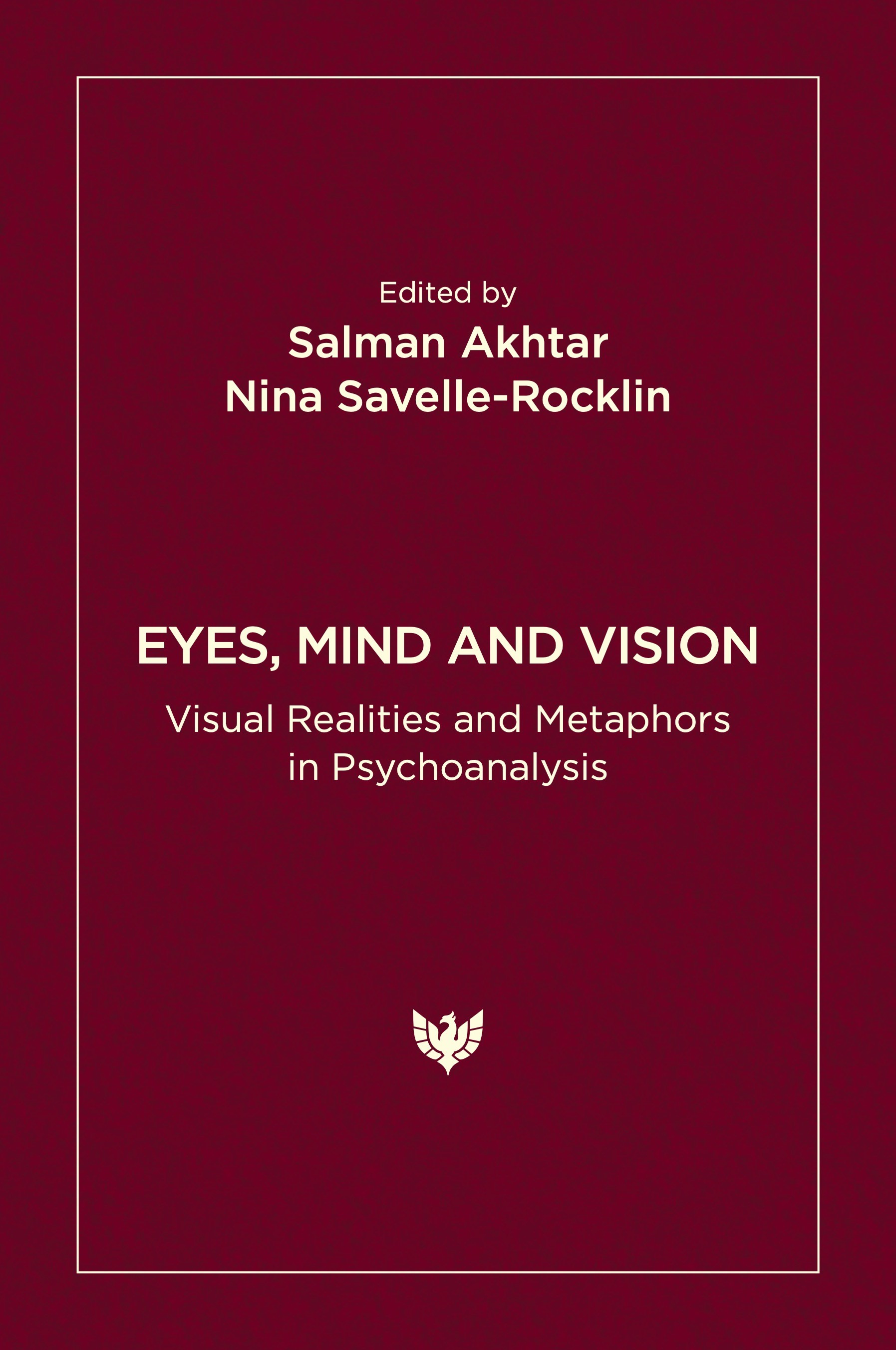
Eyes, Mind and Vision: Visual Realities and Metaphors in Psychoanalysis
A vital investigation into the importance of eyes and vision in psychoanalytic theory, which includes conceptual innovations, linguistic nuances, illustrations from fairy tales and folklore, film... (more)

Freud in Istanbul: Turkish Contributions to Psychotherapy and Psychoanalysis
A vital book that seeks to place Turkish contributions to psychoanalytic theory and practice on the international stage from which, until now, it has been curiously absent. It includes chapters from... (more)
The Joy of Torment: Understanding and Managing Sadomasochism
A search for answers on the subject of sadomasochism: its origins, forms and functions, nature, and societal status. An international group of distinguished psychiatrists, psychologists, and... (more)

Marriage and Its Discontents: Variations, Vexations, and Violations
With contributions from Anne Adelman, Salman Akhtar, Shawn Blue, Ann Eichen, Arpana G. Inman, Sameer Khan, Olga Santa Maria, Andrew Smolar, and Pratyusha Tummala-Narra.
This is a book about... (more)
In Leaps and Bounds: Psychic Development and Its Facilitation in Treatment
A tour de force from the inimitable Salman Akhtar. Dr Akhtar brings his encyclopaedic knowledge of psychoanalysis to present a deceptively simple guide to personality development across the full... (more)
Truth: Developmental, Cultural, and Clinical Realms
This edited collection gathers together erudite and considered contributions from Salman Akhtar, Cobi Avshalom, Brett Clarke, Mali Mann, Gila Ofer, Thomas Ogden, Louis Rothschild, Batya Shoshani,... (more)
Good Feelings: Psychoanalytic Reflections on Positive Emotions and Attitudes
This tightly edited volume opens a new vista in psychoanalysis by focusing upon positive and life-enhancing emotions and attitudes. The realms it covers include love, friendship, enthusiasm, courage,... (more)
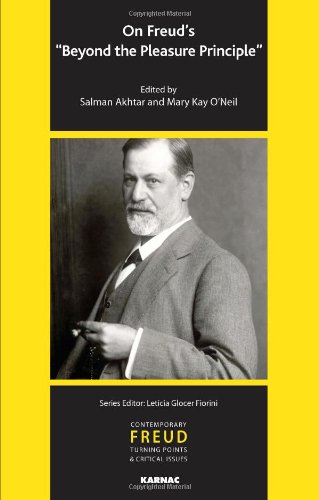
On Freud's "Beyond the Pleasure Principle"
Freud's Beyond the Pleasure Principle constitutes a major landmark and a real turning point in the evolution of psychoanalytic theory. Pushing aside the primacy of the tension-discharge-gratification... (more)
Comprehensive Dictionary of Psychoanalysis
This book provides easy to read, concise, and clinically useful explanations of over 1800 terms and concepts from the field of psychoanalysis. A history of each term is included in its definition and... (more)
Fear: A Dark Shadow Across Our Life Span
Beginning with Freud’s celebrated case of Little Hans, psychoanalysts and psychotherapists have been intrigued with the topic of fear. Eclipsed in theoretical writings by the term ‘anxiety’, fear... (more)
Arrogance: Developmental, Cultural, and Clinical Realms
Arrogance as a specific constellation of affect, fantasy, and behavior has received little attention in psychoanalysis. This is striking in light of the enormous amount of literature accumulated on... (more)
In Short: Private Notes of a Psychoanalyst
In Short: Private Notes of a Psychoanalyst is wise, uplifting and inspiring. Salman Akhtar brings his talent for poetic literature to gift us 111 pithy ‘proto essays’ on a wide range of subjects. His... (more)
Unlit Corners: Dirtiness, Miserliness, Shyness, Outrageousness, Shallowness, Indecisiveness, Restlessness, and Cowardliness
Unlit Corners endeavours to bring light to neglected character traits which many struggle to overcome. Filled with relevant case studies and carefully crafted psychoanalytic theory, the book... (more)
Anxiety: Clarification, Critique and Update
A much-needed exploration of anxiety from a variety of outlooks: conceptual, developmental, cultural, and clinical – from both the patient and the analyst’s viewpoint. Ten original papers from ten... (more)
Greed: Developmental, Cultural, and Clinical Realms
Though references to it are scattered in the writings of Klein and Winnicott, the topic of greed has drawn meagre attention from contemporary psychoanalysts. This book fills that lacuna. Noting that... (more)
Hopelessness: Developmental, Cultural, and Clinical Realms
Hope is the most reliable sustainer of life. It offers the promise of something good in the future, contributes to resilience, and keeps one going. However, there are circumstances when hope dries... (more)
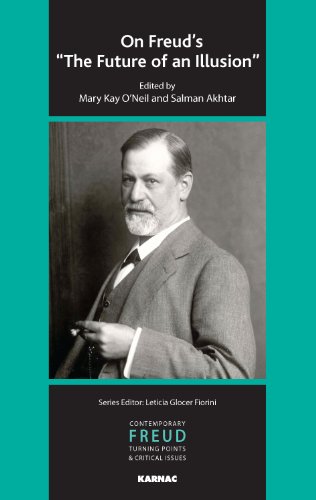
On Freud's "The Future of an Illusion"
"The Future of an Illusion" reveals Freud's reflections about religion as well as his hope that in the future science will go beyond religion, and reason will replace faith in God. The discussion... (more)
Psychoanalytic Listening: Methods, Limits, and Innovations
'Joseph Breuer’s celebrated patient, Anna O., designated psychoanalysis to be a "talking cure". She was correct insofar as psychoanalysis does place verbal exchange at the center stage. However, the... (more)
On Freud's "The Unconscious"
If there ever was one word that could represent the essence of Freud’s work, that word would be ‘unconscious’. Indeed, Freud himself regarded his 1915 paper ‘The Unconscious’ as central to clarifying... (more)
Good Stuff: Courage, Resilience, Gratitude, Generosity, Forgiveness, and Sacrifice
Good Stuff is divided into two main parts; Part I addresses Positive Attributes and Part II, Positive Actions. The former contains chapters on Courage, Resilience, and Gratitude. The latter contains... (more)
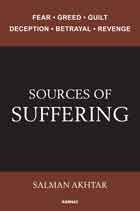
Sources of Suffering: Fear, Greed, Guilt, Deception, Betrayal, and Revenge
This concise and well-written book deals with six important roots of human anguish. It divides the six areas into those primarily affecting the individual and those primarily affecting others around... (more)

Turning Points in Dynamic Psychotherapy: Initial Assessment, Boundaries, Money, Disruptions and Suicidal Crises
'Putting aside the narcissistic-masochistic aspiration of authoring a text on all the intricacies of in-depth psychotherapy, I have chosen to address five areas of difficulty in this enterprise. This... (more)
Matters of Life and Death: Psychoanalytic Reflections
The author's focus in this book is upon the intrapsychic vicissitudes of what it means to be truly alive and how death accompanies us at each step of our life's journey. He attempts to show that,... (more)
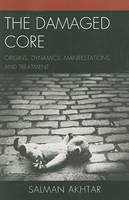
The Damaged Core: Origins, Dynamics, Manifestations, and Treatment
This comprehensive and tightly argued book deals with the process through which a coherent self evolves, the various ways such development fails to occur, and the therapeutic measures to put things... (more)
Tales of Transformation: A Life in Psychotherapy and Psychoanalysis
One hundred (and one) tales to mark Salman Akhtar’s one hundredth book! Divided into eight informative parts – Dr Akhtar’s journey to psychoanalysis; the lessons he learned from his teachers,... (more)
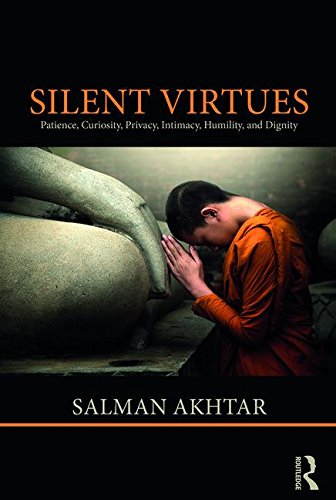
Silent Virtues: Patience, Curiosity, Privacy, Intimacy, Humility, and Dignity
Silent Virtues addresses six areas of mental functioning, namely, patience, curiosity, privacy, intimacy, humility, and dignity. Each of the areas is elucidated with the help of clinical, literary,... (more)
Intimacy: Clinical, Cultural, Digital and Developmental Perspectives
Intimacy: Clinical, Cultural, Digital and Developmental Perspectives applies a contemporary, psychoanalytic lens to the many facets of intimacy between people, from romantic and sexual relationships,... (more)
Privacy: Developmental, Cultural, and Clinical Realms
In this, the latest in a series of books examining emotional states and psychological life, Salman Akhtar and Aisha Abbasi critically discuss a concept that remains, appropriately perhaps, elusive... (more)

Eroticism: Developmental, Cultural, and Clinical Realms
With contributions from distinguished scholars and clinicians who view human erotic desire from modern developmental, relational, societal, and cross-cultural perspectives, Eroticism: Developmental,... (more)