




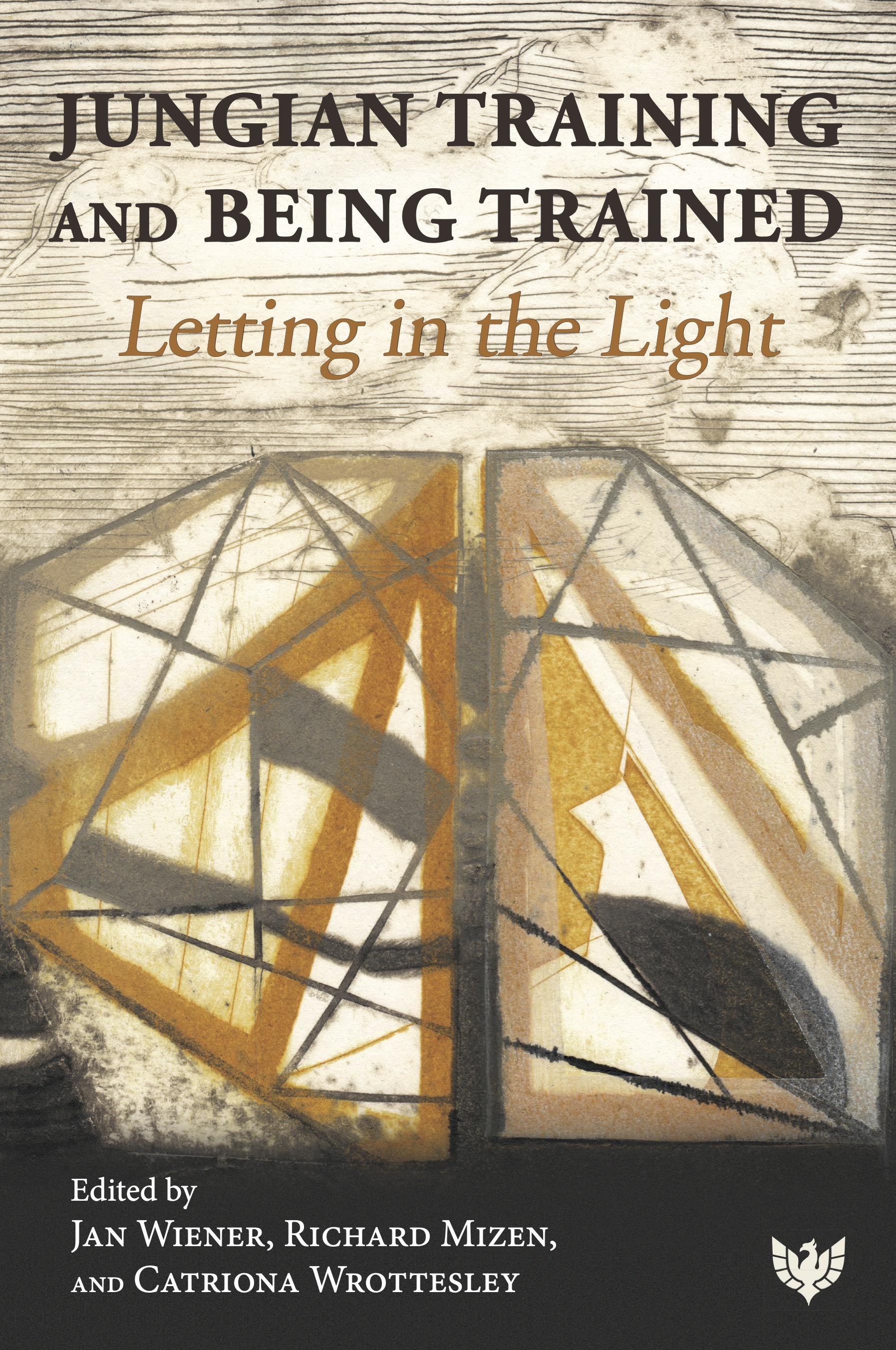
Jungian Training and Being Trained: Letting in the Light
Book Details
- Publisher : Karnac Books
- Published : October 2026
- Cover : Paperback
- Pages : 286
- Category :
Forthcoming - Category 2 :
Jung and Analytical Psychology - Catalogue No : 98560
- ISBN 13 : 9781800134744
- ISBN 10 : 1800134746
Also by Jan Wiener
save £6.80
Free UK Delivery over £35



There are currently no reviews
Be the first to review

A Jungian approach to training emphasises the importance of individuation. Yet, most analytic training takes place in institutions with hierarchical cultures. This edited volume investigates the unconscious forces within training institutions worldwide that can undermine the very values these institutions want to help their candidates to develop.
Jungian Training and Being Trained lets in the light on the unconscious forces that shape the training experience of trainees and trainers. It explores and challenges many of the implicit assumptions that influence and fashion the trainings on offer. International contributors, each engaged in the development and delivery of training, examine the various conscious and unconscious beliefs and processes that not only creatively inform, support, and structure the training process, but also undermine or contaminate it.
The aim of training candidates is to enable them to develop into authentic analysts who have learned the competences they need, have developed personally, can use their imagination, and will be safe to work with a range of patients in different environments. While Jungian trainings in different parts of the world will vary in their structures, content, and processes, most will involve a gatekeeping process for admissions, requirements for personal analysis, the study of theory, working with patients in supervision, and to have in place a process of assessment during training until qualification.
The book includes chapters devoted to contemporary training values, the dynamics of selection for training, the role of a training analysis, cross-cultural challenges in trainings, the role of theory in training, diversity, and inclusion, and the personal stories of recently qualified candidates about the pleasures and challenges of their training experiences. Themes running through the book are the potential damage that unaccountable power among the analysts and those who organise training can exercise in our trainings, resistances to change within our training institutes, failures to appreciate cultural differences, and questions of how diverse and inclusive we really are when it comes to our candidates.
This book is essential reading for all those training or trained in analysis. It raises important ideas for the psychoanalytic community to consider and implement to ensure analytic training institutions achieve their aims and offer best practice for trainees and trainers.
Reviews and Endorsements
‘Simply the best and most serious discussion of training, Jungian or otherwise, that comes to grips with the deepest issues and conflicts in the training process. Written by a distinguished series of international analysts who share personal and theoretical perspectives which help us think in-depth about training, from selection bias to cultural dynamics and identification with the supervisor and more. Highly recommended!’
Henry Abramovitch, Professor Emeritus, Tel Aviv University, Founding President, Israeli Institute of Jungian Psychology in honour of Erich Neumann
‘This compelling book addresses a core topic among global Jungians: the lack of uniform training and language. While practitioners strive for belonging, they must balance core Jungian values with modern psychotherapeutic developments. This text beautifully demystifies this opaque situation. Through a rich blend of experiential accounts, personal reflections, and theoretical insights, it explores the evolution of analytical psychology from multiple perspectives. Ultimately, it provides a vital foundation for colleagues worldwide to engage in creative dialogue, bridging traditional roots with contemporary practice.’
Prof. Dr. phil. Verena Kast, psychologist and psychotherapist, and past president, International Association of Analytical Psychology
‘Rare is a book that so refreshingly and openly brings to light and explores the multiple unconscious biases, implicit assumptions, and potential damage that unaccountable power can impose in relation to training to become a Jungian analyst. Seasoned analysts from across the globe share their perspectives and concerns about how unconscious assumptions and unquestioned beliefs foster resistance to change and failure to appreciate differences of all sorts, including those of culture, class, religion, gender, sexuality, and unique abilities. In support of this, a personal statement from eight recently accepted analysts, four from the UK and four from different cultures, share reflections on the strengths and weaknesses of their experience of training. For anyone interested in and concerned about analytic training, this book in my estimation, is a must! I highly recommend it.
Tom Kelly, past president, International Association of Analytical Psychology
‘In Jungian Training and Being Trained, contributors from across the international community offer personal and institutional experiences in a tapestry of perspectives, covering aspects of practice and theory in training. This book illuminates the complexities of learning to become a Jungian analyst and the challenges of belonging to evolving group cultures and professional communities. The discussion of hierarchical attitudes, unconscious dynamics and structural inequalities exposes the damage that can result from unaccountable power and resistance to change. A vital work that celebrates difference, this is important reading for those who are interested in creating inclusive, dynamic trainings for the future.’
Susanna Wright, Supervising analyst of Society of Analytical Psychology and British Jungian Analytic Association
Table of Contents
Acknowledgements
Introduction
About the editors and contributors
1. Methods of training and their relevance in a contemporary world
Evy Tausky, Pia Skogemann, and Jay Barlow
Underlying assumptions about training, obstacle or resource?
Evy Tausky, C. G. Jung Institute, Zurich
How should we train analysts today?
Pia Skogemann, Danish Society of Analytical Psychology
Managing the balance between tradition and progression
Jay Barlow, Society of Analytical Psychology, London
2. The selection and acceptance of candidates for training: Do we get it right?
Jan Wiener and Carolyn Bates
The selection of applicants for training
Jan Wiener, Society of Analytical Psychology, London
The acceptance of applicants for training
Carolyn Bates, Inter-Regional Society of Jungian Analysts, USA
3. Training analysis: Squaring the circle
Richard Mizen, Society of Analytical Psychology, London
4. The role and teaching of theory
David Hewison and Nora Swan-Foster
The role of theory in training
David Hewison, Society of Analytical Psychology, London
For the love of theory
Nora Swan-Foster, Inter-Regional Society of Jungian Analysts, USA
5. Training at the International Association of Analytical Psychology
Misser Berg and Grazina Gudaitė
The challenges of organising a worldwide training
Misser Berg, Danish Society for Analytical Psychology
The cross-cultural aspects of training
Gražina Gudaitė, Lithuanian Association for Analytical Psychology
6. Assessing progress: What do we expect trainees to know?
Jan McGregor Hepburn, British Psychotherapy Foundation and Richard Mizen, Society of Analytical Psychology, London
7. Unaccountable power and prejudice in our institutes
Catriona Wrottesley and François Martin-Vallas
In a dark time, the eye begins to see
Catriona Wrottesley, Society of Analytical Psychology, London
Empowerment and training
François Martin-Vallas, Société Française de Psychologie Analytique
8. Diversity and inclusion
Jay Barlow, Hellen Mabhikwa, Kathrine Quiller, and Kate Palmer
Developing a diversity and inclusion programme within an analytic/therapeutic training
Jay Barlow, Society of Analytical Psychology, London
Jung’s reconciling symbol—re-imagining racism
Hellen Mabhikwa, Analytical Psychotherapy Training:Birmingham, UK
Class, and its intersection with psychoanalytic training
Kathrine Quiller, Society of Analytical Psychology, London
“Queer subjectivity” as analytic attitude
Kate Palmer, Society of Analytical Psychology, London
9. Fifteen-minute stories about training in the UK
Laura Chaisty, Urvashi Chand, Richard Jenkins, and Sue Tyler
Taking shape
Laura Chaisty, Analytical Psychotherapy Training:Birmingham, UK
The challenges of belonging
Urvashi Chand, British Jungian Analytic Association,London
Labhraím beagán (“I speak a little”)
Richard Jenkins, Association of Jungian Analysts, London
Transcending the shadow of training
Sue Tyler, Society of Analytical Psychology, London
10. Fifteen-minute stories about training from around the world
Shiva Avital, Valentyna Samus, Jelena Sladojević Matić, and Monika Srebro
A process of individuation in Kleinian and Jungian supervision
Shira Avital, British Psychotherapy Foundation, London
My analytic training at the crossroads of cultures in crisis
Valentyna Samus, Ukraine Association of Analytical Psychology and Lithuanian Association of Analytical Psychology
Jungian analysis in Serbia
Jelena Sladojević Matić, International Association of Analytical Psychology
East of the sun, west of the moon—a story of reconciliation
Monika Srebro, Polish Society of Jungian Psychoanalysts
Index
About the Editor(s)
Jan Wiener is a training analyst and supervisor for the Society of Analytical Psychology (SAP) and a previous director of training. She continues in the role of internal consultant to the training at the SAP. She was vice president of the International Association of Analytical Psychology (IAAP) from 2010 until 2013 and a member of the IAAP Executive Committee for six years before that where she had responsibility for the development of the IAAP Router Programmes in different parts of the world. Post-perestroika, together with a group of UK colleagues from different Institutes, she visited different cities in Russia several times a year for more than twenty-five years to provide a programme of teaching, supervision and personal analysis for those wishing to become Jungian analysts who until then had no access to qualified analysts and teachers. Since then, she has taught and supervised extensively in many different parts of the world and is a member of the Training Committee for the Danish Institute (DSAP). She is an external examiner for the Association of Jungian Analysts (AJA) and she has recently completed terms of office as external examiner for the Institute of Psychoanalysis in London and the University of Exeter. She is the author of many papers and chapters on themes such as the analytic relationship, transference and countertransference, unconscious identity, training, supervision and ethics and author/editor of four books. Her book The Therapeutic Relationship: Transference, Countertransference and the Making of Meaning was published by Texas A and M University Press in 2009 and has recently been republished by Jungianeum in 2024 as part of a project to republish classic texts in analytical psychology. Her most recent book, Jungian Analysts Working Across Cultures: From Tradition to Innovation (Crowther and Wiener, Eds.) was published by Routledge in 2021.
Richard Mizen has worked as a psychotherapist for forty years and qualified as an analyst over thirty years ago. He trained with the Society of Analytical Psychology (SAP) where he is a training analyst and a past member and Chair of the Training Committee. At the SAP he contributed to the design and delivery of various forms of training. He is in private practice as an analyst at Exeter in the southwest of England. For the last eighteen years he has worked at the University of Exeter as Director of the Studies in Psychoanalytic Psychotherapy portfolio of programmes, part of the Psychology School in the Faculty of Health and Life Sciences, where he is an Associate Professor. He designed and leads a doctoral training programme that enables clinicians to become researchers and a second doctoral programme that provides British Psychoanalytic Council accredited clinical trainings to become either a Psychodynamic Psychotherapist or a Psychoanalytic Psychotherapist. This programme allows access to training from across the UK and internationally. He has published widely and works as a consultant and clinical supervisor to trainees, qualified analysts and psychotherapists and to organisations. He supervises postgraduate research at doctoral and master’s level and has acted as an External Examiner to both academic and clinical programmes. He has taught nationally and internationally including in Italy, the US and Pakistan.
Catriona Wrottesley is a training analyst for the Society of Analytical Psychology (SAP) and the Independent Psychoanalytic Child and Adolescent Psychotherapy Association (IPCAPA), and senior couple psychoanalytic psychotherapist at Tavistock Relationships, London. She supervises therapists from the UK and abroad, including Germany, Ukraine, and China and is external examiner for the West Midlands Institute of Psychotherapy. She joined Tavistock Relationships’ (TR) faculty staff as a clinical lecturer in 2012, where she was later appointed head of the MA in couple and individual psychodynamic counselling and psychotherapy and MSc in psychosexual and relationship therapy before taking up the position of head of psychoanalytic training until 2020. Catriona writes and reviews for a range of journals and is an editorial board member of the Journal of Analytical Psychology, reviewer for Couple and Family Psychoanalysis journal, and a member of the review committee for the International Review of Couple and Family Psychoanalysis. Her interests are in atmospheres, early states of mind, transgenerational transmission, narcissistic and authoritarian power relationships, and the nature of psychic reality and subjectivity.
Customer Reviews
Our customers have not yet reviewed this title. Be the first add your own review for this title.
You may also like

Jung's Life and Work: Interviews for Memories, Dreams, Reflections with Aniela...
C.G. Jung
Price £30.00
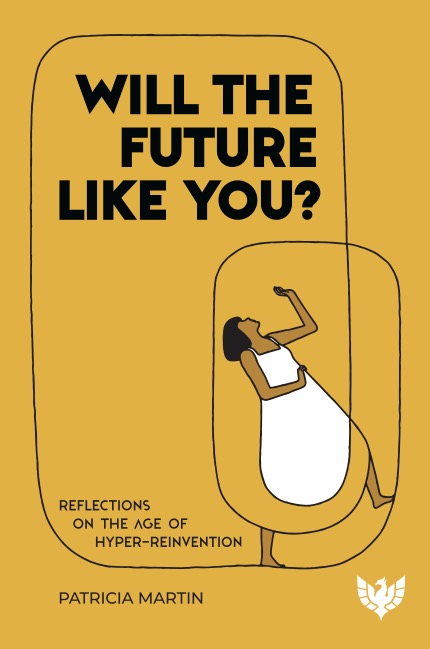
Will the Future Like You? Reflections on the Age of Hyper-reinvention
Patricia Martin
Price £17.99
save £2.00

EU Mandatory Customs Duty Charge
Price £2.60