



C.G. Jung
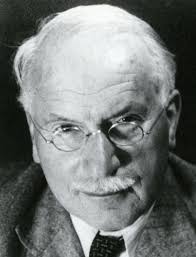
C. G. Jung (1875 - 1961) was a Swiss psychiatrist, innovative thinker and founder of Analytical Psychology, whose most influential ideas include the concept of psychological archetypes, the collective unconscious, and synchronicity. He is the author of numerous works, including Memories, Dreams, Reflections and Man and His Symbols.

The Active Imagination: Notes from the Seminar Given in 1931
In the fall of 1931, C. G. Jung gave an intensive series of seminars on the use of active imagination in clinical practice. Delivered at the Hotel Sonne in Zurich, these lectures describe a technique... (more)
The Archetypes and the Collective Unconscious (Collected Works: Vol. 9 Part 1)
The concept of "archetypes" and the hypothesis of "a collective unconscious" are two of Jung's better known ideas. In this volume, taken from the Collected Works, Jung describes and elaborates the... (more)
Jung's Life and Work: Interviews for Memories, Dreams, Reflections with Aniela Jaffé
In 1957, at the age of eighty-one, C. G. Jung began a collaboration with his student and secretary Aniela Jaffé and the legendary publisher Kurt Wolff on a book about his life. Memories, Dreams,... (more)
Four Archetypes
The concept of the archetype is crucial to Jung's radical interpretation of the human mind. Here he considers the archetypes he regarded as fundamental to every living individual: mother, rebirth,... (more)
The Essential Jung: Selected Writings
This compact volume of key extracts from the formidable mass of Jung's published writings presents the essentials of Jung's thought in his own words. Anthony Storr's prefatory notes to each extract... (more)
The Red Book: Liber Novus
When Carl Jung embarked on the extended self-exploration he called his 'confrontation with the unconscious', the heart of it was The Red Book, a large, illuminated volume he created between 1914 and... (more)
Psychological Types
Psychological Types is one of Jung's most important and famous works. First published by Routledge in the early 1920s it appeared after Jung's so-called fallow period, during which he published... (more)
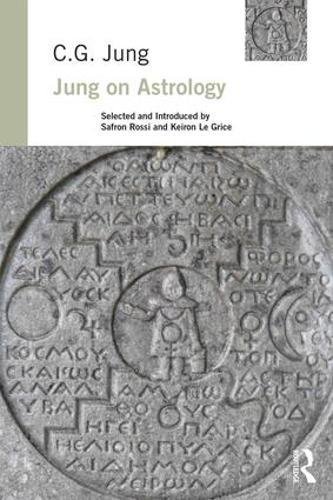
Jung on Astrology
Jung on Astrology brings together C. G. Jung's thoughts on astrology in a single volume for the first time, significantly adding to our understanding of Jung's work. Jung's Collected Works, seminars,... (more)

The Spirit in Man, Art and Literature
This volume reveals the full range of Jung's involvement in this process, from his famous analysis of 'Psychology and Literature' to his landmark texts on Joyce's Ulysses and Picasso's paintings. (more)
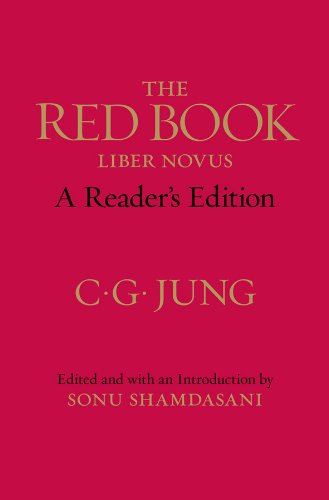
The Red Book: A Reader's Edition
The Red Book (catalogue number 29085), published to wide acclaim in 2009, contains the nucleus of C.G. Jung's later works. It was here that he developed his theories that would transform... (more)

The Question of Psychological Types: The Correspondence of C. G. Jung and Hans Schmid-Guisan 1915-1916
In 1915, C. G. Jung and his psychiatrist colleague, Hans Schmid-Guisan, began a correspondence through which they hoped to understand and codify fundamental individual differences of attention and... (more)
The Undiscovered Self
Written three years before his death this book presents Jung at his very best. Offering clear and crisp insight into some of his major ideas and arguments, such as the duality of human nature, the... (more)
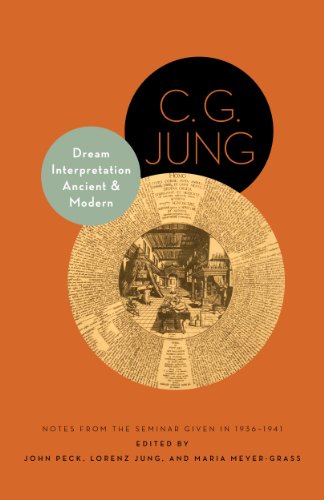
Dream Interpretation Ancient and Modern: Notes from the Seminar Given in 1936-1941
From 1936 to 1941, C. G. Jung gave a four-part seminar series in Zurich on children's dreams and the historical literature on dream interpretation. This book completes the two-part publication of... (more)
Analytical Psychology
In 1935 Jung gave a now famous course of five lectures at the Tavistock Clinic in London. In them he set out in lucid and compelling fashion his theory of the mind and the methods he had used to... (more)
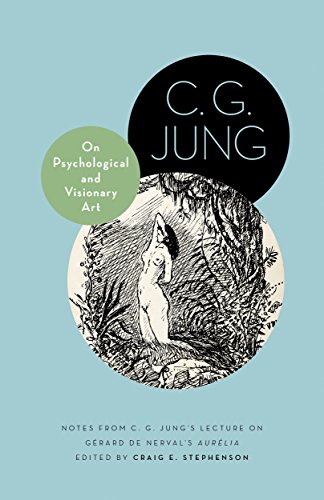
On Psychological and Visionary Art: Notes from C. G. Jung's Lecture on Gerard de Nerval's Aurelia
In 1945, at the end of the Second World War and after a long illness, C. G. Jung delivered a lecture in Zurich on the French Romantic poet Gerard de Nerval. The lecture focused on Nerval's visionary... (more)
The Development of Personality: Papers on Child Psychology, Education, and Related Subjects: The Collected Works of C.G. Jung: Vol. 17:
Papers on child psychology, education, and individuation, underlining the overwhelming importance of parents and teachers in the genesis of the intellectual, feeling, and emotional disorders of... (more)
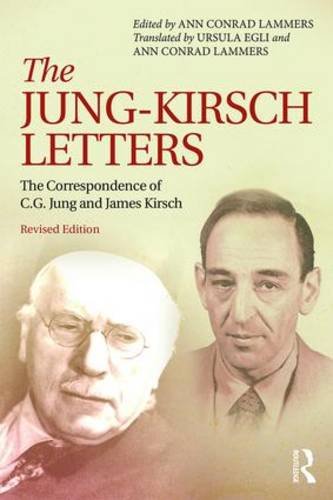
The Jung-Kirsch Letters: The Correspondence of C.G. Jung and James Kirsch: Second Edition
This book charts Carl Gustav Jung's 33-year (1928-61) correspondence with James Kirsch, adding depth and complexity to the previously published record of the early Jungian movement. Kirsch was a... (more)
Collected works Vol.18: The symbolic life - miscellaneous writings
Originally planned as a brief final volume in the Collected Works, The Symbolic Life has become the most ample volume in the edition, and one of unusual interest. It contains some 160 items spamming... (more)
Jung on the East
A selection of Jung's key writings on the East in which the main features of Jung's studies of Eastern texts and ideas are outlined. The text includes passages from Jung's writings on India, China,... (more)
Psychology and religion
Based on the Terry lectures given at Yale University. 131 pages. (more)