



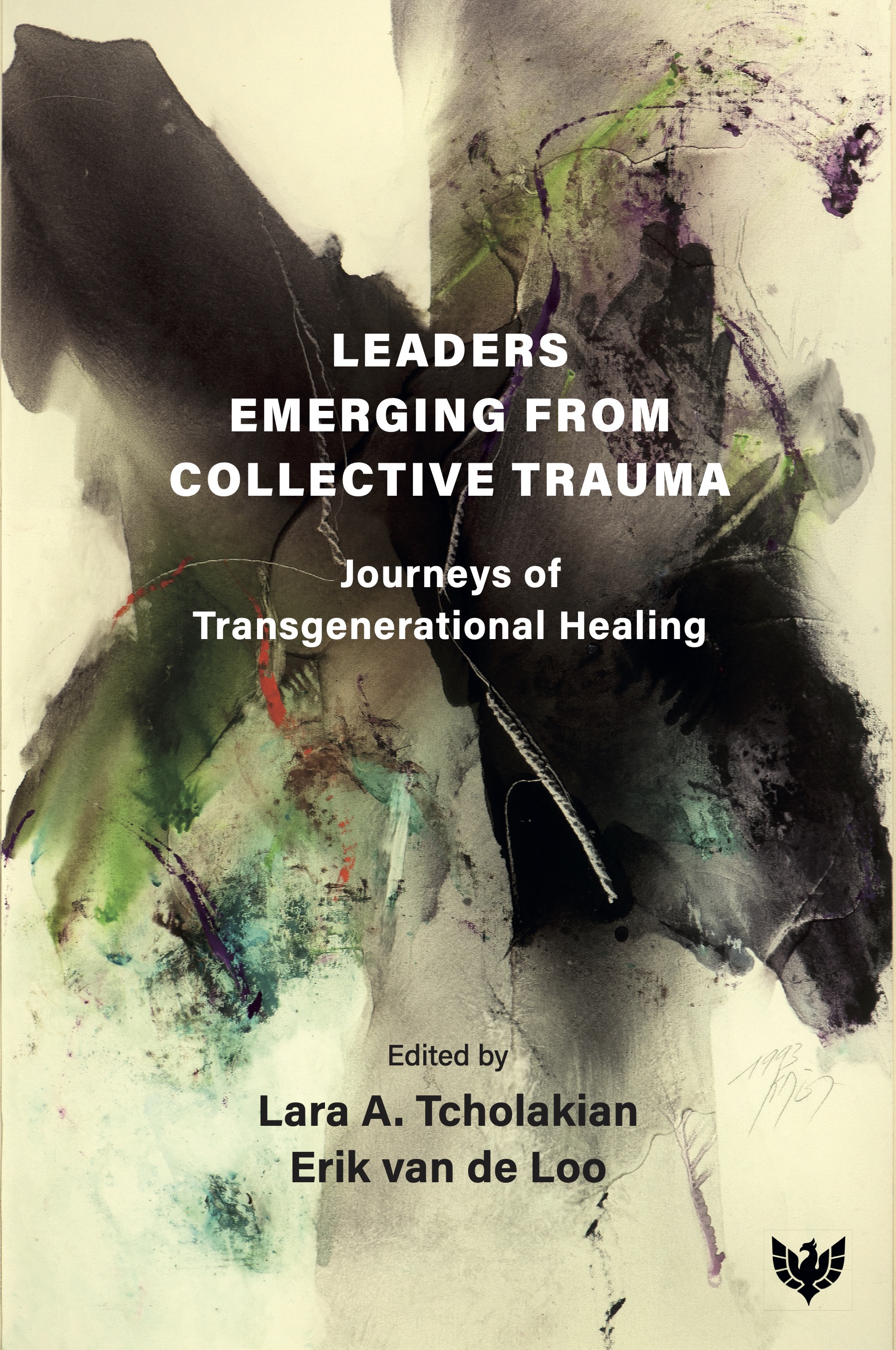
Leaders Emerging From Collective Trauma: Journeys of Transgenerational Healing
Book Details
- Publisher : Karnac Books
- Published : June 2026
- Cover : Paperback
- Pages : 220
- Category :
Trauma and Violence - Catalogue No : 98521
- ISBN 13 : 9781800134386
- ISBN 10 : 180013438X
save £2.80
Free UK Delivery over £35

save £5.00
save £20.99
Free UK Delivery over £35


There are currently no reviews
Be the first to review

Leaders Emerging From Collective Trauma: Journeys of Transgenerational Healing examines the impacts of current-day and ancestral collective traumas on leaders and executives to illuminate the human experience and dynamics related to leadership.
With contributions from Aydin Ilhan, Zeinab El Kabbout, Natasha Kewene-Hite, Andrés Neira, Alvin Lloyd Peter, Japjit Sobti, Suraimy (Sue) Stephens, Lara A. Tcholakian, Erik van de Loo, and Dianne Yun.
Despite the wounds that collective traumas can leave on survivors and descendants, there can also be adverse instrumental and constructive results from healing and inner work. This important work opens the conversation about the global effects of current and past collective traumas on organisational leaders and executives, as well as the impact that these traumas can have on behaviours, patterns, and values. More specifically, the contributions reflect the inner work that organisational leaders and executives have conducted and the meaning-making opportunities they share concerning their history, culture, language, and overall relationship with their inherited traumas.
Each chapter is authored by an executive leader who shares their story, each from a different part of the world, culture, or ethnicity. They describe in their own words how they have discovered the birthplace of their conditioning and how they can (re)connect with significant parts of their recent or ancestral collective traumas (i.e. war, conflicts, genocide, large-scale calamities such as blasts or natural disasters). The authors describe their reflections on their connection with their traumas, how they conduct repair work, and the journey of transformation, healing, and self-awareness. Through historical consciousness, these executive leaders show how they transform their inherited collective traumas for the greater good, integrate their awareness or knowledge, and attempt to lead more meaningful professional and personal lives.
The editors aim to present an overview of collective trauma and provoke reflection in the reader. It is relevant for all who want to engage with this topic and deepen their knowledge, including the general reader, researchers, policymakers, politicians, healthcare professionals, journalists, and other professionals looking for deeper insight into the role of leadership.
Reviews and Endorsements
The stories in this outstanding book teach us to pay respect to the past of our families, communities, and societies. It is both saddening and enlightening to understand the personal and societal impact of collective traumas on today’s life and leadership. Meaningful reflection and commemoration not only acknowledge the life and pain of our ancestors, but also guide our leadership in the uncertain present and future world.
Thom de Graaf, Vice-President, Council of State and former Deputy Prime Minister, The Netherlands
The Nobel Prize-winning author William Faulkner once wrote, “The past is never dead. It’s not even past.” Lara Tcholakian, Erik van de Loo, and their associates appear to have taken this insight deeply to heart in their book. They demonstrate how unresolved traumas are carried forward – often unconsciously – from one generation to the next, shaping leadership, institutions, and social dynamics in subtle yet powerful ways. The authors argue convincingly that genuine societal healing cannot occur until these deep-seated traumas are consciously acknowledged and worked through. Given the profound relevance of this subject for all of us, this book goes beyond analysis by offering also practical pathways for addressing these collective traumas. Hence, it stands as a compelling resource for readers interested in mental health, leadership, and the psychological dynamics that govern society.
Manfred F. R. Kets de Vries, Distinguished Clinical Professor of Leadership Development and Organizational Change, INSEAD
Whilst the worldwide political and economic systems are cracking, leaders have to act in a highly conflicted environment. This very timely book can help them to understand the challenges of when old wounds are activated in new situations. Both editors bring a sound knowledge of the often unconscious and hidden dynamics of collective trauma, and how it plays out in societies and organisations. They have brought together an exquisite assembly of international authors, who demonstrate with numerous vignettes the potential impact leaders can have in dealing with and healing collective trauma.
Regine Scholz, PhD, psychologist, group analyst, specialist in trauma treatment, and Training Director, International Dialogue Initiative
Leaders Emerging From Collective Trauma comes at a critical time, when the world needs leaders who can enable their organisations to navigate the increasing levels of uncertainty and change, whether driven by geopolitical or technological landscapes. Leaders who develop the discipline and skill to self-reflect and explore their personal and societal legacies, including individual and collective trauma, will be best positioned to support their teams and organisations to navigate the challenges ahead with clarity and resilience.
Loren I. Shuster, Chief People Officer, the LEGO Group
Table of Contents
Acknowledgements
About the editors and contributing authors
Introduction
Part I: A general overview
1. Leader development: The impact of collective traumas
Lara A. Tcholakian
Part II: War and genocide
2. Resilience in the face of inherited and ongoing collective traumas: The case of the unspoken Lebanese narrative
Zeinab E l Kabbout
3. From invisible to empowered: Art’s transformative impact on identity and healing
Dianne Yun
4. In the shadows of the Armenian Genocide: Making meaning of the past
Lara A. Tcholakian
5. A deep dive into the unremembered past: Reflections on the India–Pakistan partition, the anti-Sikh riots, and the journey onward
Japjit Sobti and Lara A. Tcholakian
6. Remembering and working through at the Ottakringer Brewery
Erik van de Loo
Part III: Slavery and colonialism
7. Discovering and integrating my heritage of slavery
Suraimy (Sue) Stephens
8. In search of connection and place: Deconstructing myth and finding my turangawaewae
Natasha Kewene-Hite
9. The birthplace of tenacity and resilience: A South African tale
Alvin Lloyd Peter
Part IV: Authoritarianism and violent repression
10. Leaders’ trials and triumphs: Understanding the impact of dictatorship on leaders in Myanmar and Brazil
Aydin Ilhan
11. Words from a wandering Colombian
Andrés Neira
Part V: Conclusion
12. Moving forward
Lara A. Tcholakian and Erik van de Loo
Index
About the Author(s)
Lara A. Tcholakian, PhD, is a Canadian-Armenian executive and founding partner of Elevate, a social enterprise that advances leadership, systemic transformation, and peace-positive business. She is also a professor at Matena’s School of Leadership and Professional Development (Armenia). She teaches, publishes, and conducts research on topics that intersect with leadership, collective traumas, systems psychodynamic approaches to leadership, and mindfulness. For more than twenty-five years, she held leadership positions in international non-governmental organisations and the corporate sector, primarily in the areas of socio-economic project development, capacity building, gender rights, organisational development, and HR, and has lived and worked in Canada, France, Peru, Sri Lanka, and Armenia. A published scholar and international speaker, she holds a doctorate in organisational behaviour from Vrije Universiteit Amsterdam’s School of Business and Economics, a master’s degree in socio-economic development from Université Paris 1—Panthéon-Sorbonne, an executive master’s degree in consulting and coaching for change from INSEAD, and a bachelor’s degree from McMaster University in Hamilton, Ontario, Canada.
Erik van de Loo, PhD in social sciences, Leiden University, is a psychoanalyst and affiliate professor of organi sational behaviour at INSEAD (Europe Campus, Fontainebleau), where he has been the co-director of the executive master’s in change programme since 2001.
Previously, he had professorships at the Vrije Universiteit Amsterdam, TIAS-Tilburg University (the Netherlands), and UniRazak University (Malaysia). He is a fellow of Phyleon, a leadership and governance firm in Amsterdam. He is a member of the International Psychoanalytical Association, the Dutch Psychoanalytic Society, and the International Society for the Psychoanalytic Study of Organizations. The focus of his research is on unconscious dynamics in leaders and boards.
Customer Reviews
Our customers have not yet reviewed this title. Be the first add your own review for this title.
You may also like
The Truth about Trauma and Dissociation: Everything You Didn't Want to Know and...
Valerie Sinason
Price £19.79
save £2.20