




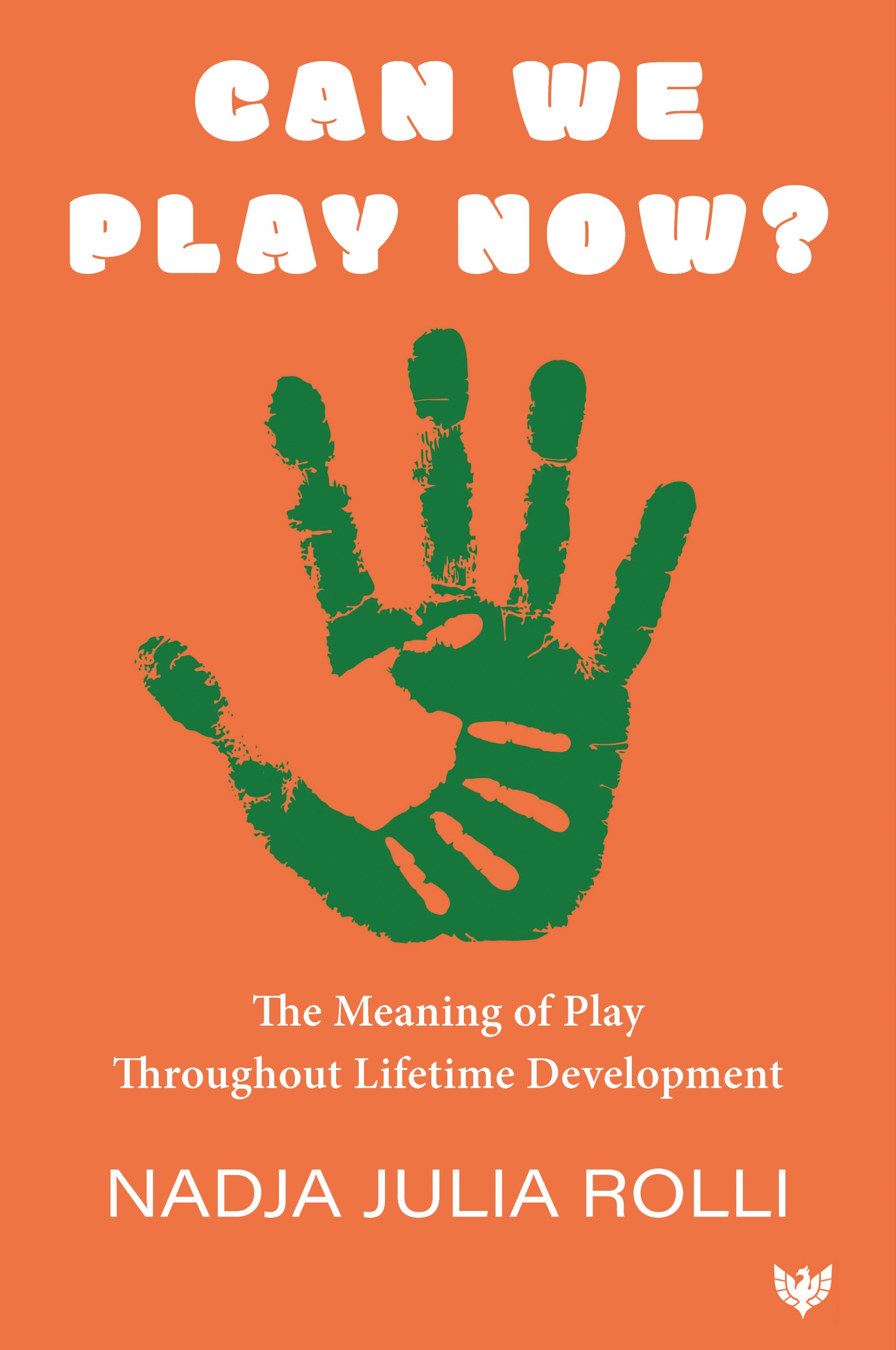
Can We Play Now? The Meaning of Play Throughout Lifetime Development
Book Details
- Publisher : Karnac Books
- Published : February 2026
- Cover : Paperback
- Pages : 246
- Category :
Child and Adolescent Studies - Catalogue No : 98442
- ISBN 13 : 9781800134232
- ISBN 10 : 1800134231
save £2.90
Free UK Delivery over £25

save £5.00
save £21.99
Free UK Delivery over £25



This book is a roadmap to understanding why children, young people, and adults play the way they play and why it really matters. Scant literature exists about the meaning of play and less still on its importance beyond early childhood. Nadja Julia Rolli shows that play is a powerful form of self-disclosure and a core aspect of emotional well-being.
Play comes in many forms, such as solitary play, imaginary play, social play, construction play, and many more. To understand the evolution of play, Can We Play Now? introduces five forms of play: sensory play, attachment play, construction play, fantasy play, and competitive play. It then links these five forms of play with Maslow’s well-known hierarchy of needs. This allows the use of a common language to gain evidence-based insight into the physical and emotional development of a human being. In this way, play becomes a roadmap to understanding the emotional world and identity formation of a child, young person, or adult, and addresses the specific needs of each developmental stage. The book also discusses how socioeconomic and cultural influences, such as the use of technology, social media, loss, developmental trauma, intergenerational trauma, and the Covid-19 pandemic, are impacting young people in the context of play development.
Can We Play Now? aims to bring a unique contribution to the field of child and adolescent psychotherapy that links key theoretical influences on the role of play within developmental milestones. It aligns findings from neuroscience, object relations, and psychodynamic theories with the various stages and challenges of emotional growth from childhood to adulthood. Clinical examples are integrated to bring the theoretical background of each chapter to life, showing the effectiveness of this approach. The ability to share these insights with child psychotherapists and other professionals who work with children, as well as parents, facilitates the creation of the best environment possible for each child to face the challenges of today’s world. It is also ideal reading for adult psychotherapists who want to understand the continuing importance of play in their clients’ lives.
Reviews and Endorsements
Play is under-rated, something of a lost art, and this rich book shows just why we must value it more, for its healing therapeutic potential, for working through trauma, for living a richer life, and, of course, for fun! This book is full of insight, rigorously utilising a range of theoretical ideas, but the heart of the book is in the clinical examples that bring the theory to life. A book for any new and experienced therapists who need reminding of why play is so crucial.
Dr Graham Music, author and consultant psychotherapist, Tavistock Centre, London
As Nadja Julia Rolli reminds us, in this book full of wisdom and clinical insight, when a child in therapy says “Can we play now?”, they are not simply saying they want to start a game, but are also telling us they are ready to start an emotional journey. Rolli herself takes the reader on just such a journey, drawing out the many different ways in which play shapes our development as children, and its vital role in supporting the “work” of therapy. The wisdom of this book will not only help those who work with children; it is also an essential reminder of the importance of play in grown-up life, and in adult therapy.
Nick Midgley, Professor of Psychological Therapies with Children and Young People, University College London and Anna Freud, London
This new book in the field of child psychotherapy provides a clear, all-round general introduction to children’s play from a developmental perspective, with a firm foundation on the theories of Maslow and Piaget. It is important, as it links children’s active play in therapy as a field to be explored and understood, and it links with my own innovations in neuro-dramatic-play. This book is long overdue in the field of child psychotherapy, and I congratulate the author on moving this practice forward.
Dr Sue Jennings, Professor of Play, EFD, Senior Research Fellow, Shakespeare Institute, University of Birmingham
Nadja Julia Rolli’s comprehensively researched book will interest scholars, students, and parents alike. With a fresh look at Maslow’s hierarchy of needs, Rolli links the importance of safe play with current thinking on attachment. She suggests that regular, high-quality, embodied play with family and friends enables us to continue developing our creativity and imagination, finding agency and stretching further our potential for growthful living.
Jon Blend, MA, Director, Gazebo Training School for Child and Adolescent Arts-based Psychotherapy
Table of Contents
Acknowledgements
About the author
Introduction
1. From the beginning
2. The system around the child
3. Physiological needs—sensory play
4. Safety needs—attachment play
5. Need for love and belonging—constructive play
6. Need for esteem—fantasy play
7. Need for self-actualisation—competitive play
8. Developmental trauma and its impact on play
9. Technology and play development
10. Where do we go from here?
References
Index
About the Author(s)
Nadja Julia Rolli, MA, is an integrative child and adolescent psychotherapist with over twenty years of experience in working with vulnerable children and their families. Formerly a primary school teacher, she initially trained in Basel/Switzerland in psychomotor therapy, a somatic psychotherapeutic approach that integrates elements of play and art therapy into the clinical work, before completing a master’s in integrative child and adolescent psychotherapy and counselling. Nadja has worked in special needs education settings, in numerous primary and secondary schools, and has been working in private practice since 2019. She co-founded the Child Psychotherapy Council (CPC), a charity established to promote and maintain the standards of practice, education, and training of child psychotherapy.
Customer Reviews
Our customers have given this title an average rating of 5 out of 5 from 2 review(s), add your own review for this title.
Helen Pitman on 28/03/2026 15:49:23
 (5 out of 5)
Can we play now provides a clear framework for play development and is highly readable. I found the case studies particularly helpful to my work as a child and adolescent psychotherapist and supervisor. The chapter on technology and play development was fascinating and gave me a relatable treatment plan to what is a familiar presentation in the therapy room.
Diana Samuels on 19/03/2026 08:32:03
(5 out of 5)
A clear, thoughtful explanation about the importance of play in child development. As a child psychotherapist working with children in the care system, I found the chapter on developmental trauma particularly insightful and helpful. Thank you
You may also like
Psychoanalysis and Feminism: A Radical Reassessment of Freudian Psychoanalysis
Juliet Mitchell
Price £17.99
save £2.00

Eyes, Mind and Vision: Visual Realities and Metaphors in Psychoanalysis
Salman Akhtar
Price £31.49
save £3.50
Child Focus in Family Systems: Communication Strategies and Analysis
Monica Hedenbro
Price £23.39
save £2.60