




Attics and Basements: The Evocative, Expressive and Embracing Functions of Homes and Other Human Dwellings
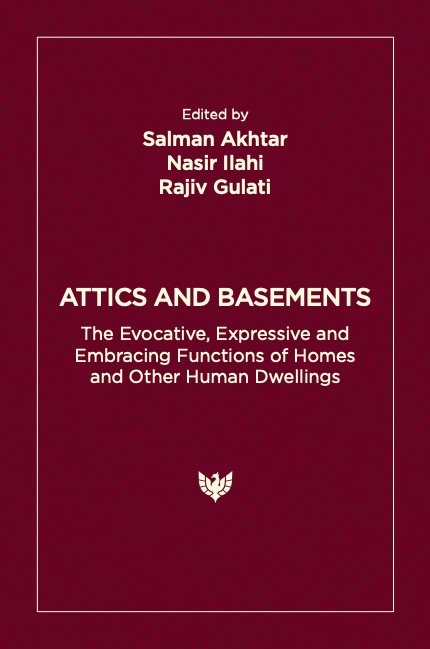
Book Details
- Publisher : Karnac Books
- Published : 2026
- Cover : Paperback
- Pages : 208
- Category :
Psychoanalysis - Catalogue No : 98448
- ISBN 13 : 9781800134201
- ISBN 10 : 1800134207
Reviews and Endorsements
‘This wide-ranging and profound book on homes and other human dwellings is well worth a read and a re-read. It is comprehensive in what it covers: childhood homes, marital homes, nostalgia for lost homes, orphanages, retirement homes, monasteries, and much more. Along with such breadth, the book delves deeply, through historical reportage and psychoanalytic deconstruction, into the external realities it considers and the internal state of affairs they embody and represent.’
Joseph Fernando, MD Training and Supervising Analyst, Toronto Institute of Psychoanalysis, author of A Psychoanalytic Understanding of Trauma
‘From the womb to the cemetery, this timely book explores the multiple facets of home. The three-year-old girl plays house, acting out all the characters in her family. The oedipal child makes forts out of pillows and blankets. The latency child decorates the room with multiple collections, dreams of growing up, and the adolescent isolates herself in her room where fantasies of leaving and building one's own home seem both exciting and terrifying. This book contains all this and much more. It is extremely important at a time when so many in our country might lose their homes!’
Ann Smolen, PhD Training and Supervising Analyst, Psychoanalytic Center of Philadelphia, author of Six Children: The Spectrum of Child Psychopathology and Its Treatment
‘Attics and Basements explores the multi-layered meanings of the notion of “home,” from our bodily beginnings in the womb and infancy to the challenges of old age and death, from the development of a sense of internal stability to existential threats. The book explores actual physical locations, the challenges of homelessness, and the notion of a secure base. In addition, the volume is infused with poetry, both in the use of language in the chapters themselves, and in the multiple references to poets and their creations – Rumi, Bachelard, T. S. Eliot, and Akhtar himself. This is a gem of a book, a pleasure both to read and digest.’
Dr. Julian Stern, Consultant Psychiatrist and Psychoanalyst, London, UK, Former Director, Adult and Forensic Services, Tavistock and Portman NHS Foundation Trust