



Jacques Lacan
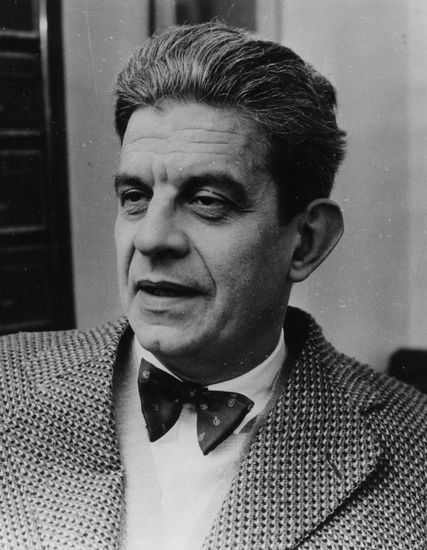
Jacques Lacan (1901-1981) came to psychoanalysis by way of medicine and psychiatry. In 1951 he turned his attention to the training of analysts, and this was one of the issues which led him and his circle to part company with the Société Psychanalytique de Paris. He became, in 1953, the first President of a new group, the Société Française de Psychanalyse, whose declared aim was a return to the true teaching of Freud. Eleven years later the Société Française was dissolved and, under Lacan's direction, gave birth to the École Freudienne de Paris. Jacques Lacan was a practising psychoanalyst and teacher up until his death in 1981.
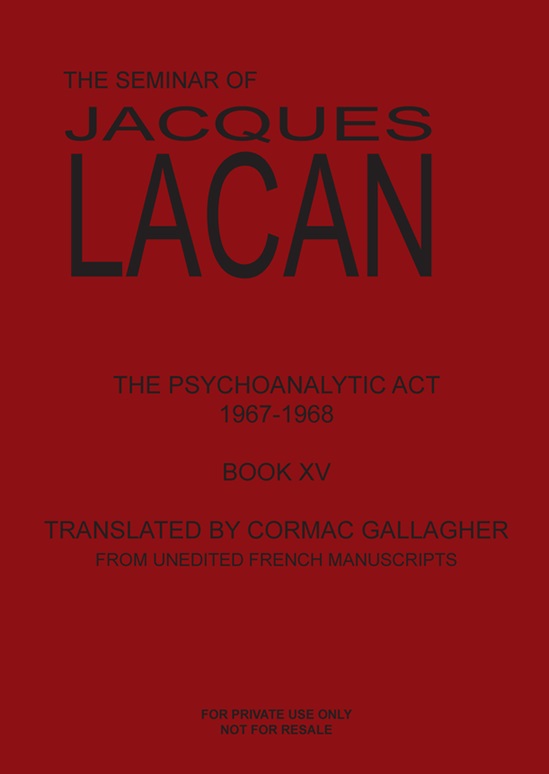
The Seminar of Jacques Lacan XV: The Psychoanalytic Act
From unedited French manuscripts (more)
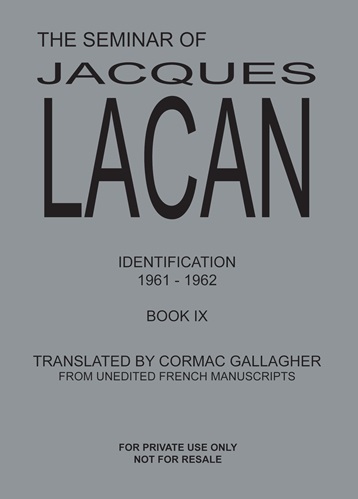
The Seminar of Jacques Lacan IX: Identification
From unedited French manuscripts (more)
The Seminar of Jacques Lacan XII: Crucial Problems for Psychoanalysis
From unedited French manuscripts
The Seminar of Jacques Lacan XIII: The Object of Psychoanalysis
From unedited French manuscripts
Jacques Lacan: Family Complexes in the Formation of the Individual
From unedited French manuscripts
The Seminar of Jacques Lacan XXIII: Joyce and the Sinthome 1975-1976
From unedited French manuscripts. (more)
The Seminar of Jacques Lacan: The Knowledge of the Psychoanalyst 1971-1972
From unedited French manuscripts
The Seminar of Jacques Lacan XIV: The Logic of Phantasy
From unedited French manuscripts (more)
The Seminar of Jacques Lacan XVII: Psychoanalysis Upside-Down
From unedited French manuscripts (more)
The Seminar of Jacques Lacan VIII: Transference
From unedited French manuscripts
The Seminar of Jacques Lacan XIX: ...Ou Pire/...Or Worse 1971-1972
From unedited French manuscripts
The Seminar of Jacques Lacan XVI: From an Other to the Other
From unedited French manuscripts (more)
On a Discourse that Might not Be a Semblance: The Seminar of Jacques Lacan, Book XVIII
The title is, at first glance, enigmatic. Clue: it concerns men and women—their most concrete, amorous, and sexual relations in everyday life, as well as in their dreams and fantasies. It has nothing... (more)
The Seminar of Jacques Lacan XX: Encore
From unedited French manuscripts. (more)
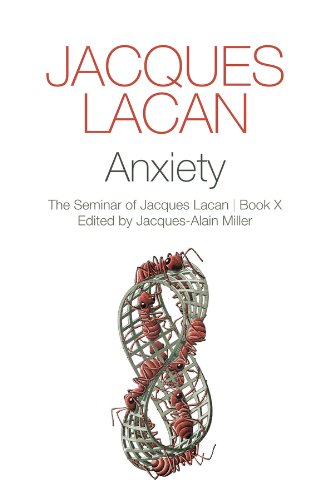
Anxiety: The Seminar of Jacques Lacan: Book X
Jacques Lacan is widely recognized as a key figure in the history of psychoanalysis and one of the most influential thinkers of the 20th Century. In this new translation of Anxiety, he explores the... (more)
The Seminar of Jacques Lacan XVIII: On a Discourse that Might not be a Semblance
From unedited French manuscripts (more)
The Seminar of Jacques Lacan VI: Desire and its Interpretation
From unedited French manuscripts
The Seminar of Jacques Lacan X: Anxiety
From unedited French manuscripts
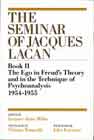
The Seminar of Jacques Lacan II: The Ego in Freud's Theory and in the Technique of Psychoanalysis, 1954-1955
Discusses the Real, Imaginary and Symbolic, the relation of the symbol and the machine, repetition, and Edgar Allan Poe's 'The Purloined Letter'.
The Seminar of Jacques Lacan III: The Psychoses, 1955-56
Examines the distinction between the neuroses and the psychoses, with particular reference to the case of Daniel Paul Schreber.
The Seminar of Jacques Lacan VII: The Ethics of Psychoanalysis, 1959-60
Includes discussion of the problem of sublimation, the paradox of jouissance, and the essence of tragedy.
On Feminine Sexuality, the Limits of Love and Knowledge - Encore 1972-1973: Seminar XX
An annotated translation of Jacques Lacan's seminar weighing up theories of the relationship between the desire for love and the attainment of knowledge. The text draws upon the work of such diverse... (more)
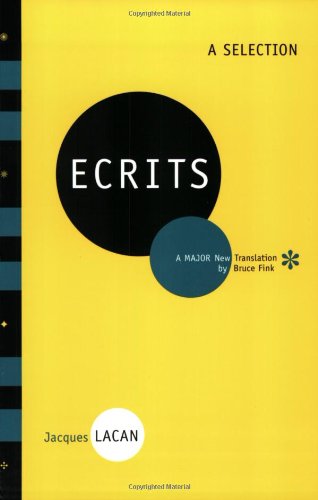
Ecrits: A Selection
Jacques Lacan has had a major influence on contemporary discourse. This translation of selected writings from his famous work offers access to nine of his most significant contributions to... (more)
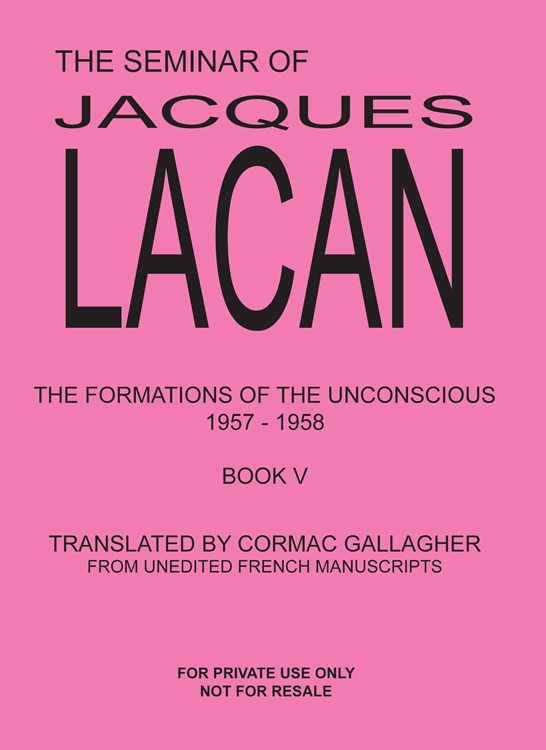
The Seminar of Jacques Lacan V: The Formations of the Unconscious
From unedited French manuscripts
Television: A Challenge to the Psychoanalytic Establishment
The main text is a transcript of a provocative filmed interview with Lacan. The interviewer, J-A Miller, poses questions often asked by those outside the Lacanian mileau. The second half contains... (more)
Ecrits: A Selection
New edition in the 'Routledge Classics' series. Includes papers on the mirror phase, the function of language, the role of the phallus, and many other key Lacanian concepts. 376 pages. (more)
The Seminar of Jacques Lacan I: Freud's Papers on Technique, 1953-54
Includes discussion of the role of the imaginary, resistance, the ideal ego and ego ideal, and the function of speech in psychoanalysis.
On the Names-of-the-Father
What astonishing success The Name-of-the-Father has had! Everyone finds something in it. Who one's father is isn't immediately obvious, hardly being visible to the naked eye. Paternity is first and... (more)
The Triumph of Religion
'I am the product of priests', Lacan once said of himself. Educated by the Marist Brothers (or Little Brothers of Mary), he was a pious child and acquired considerable, personal knowledge of the... (more)
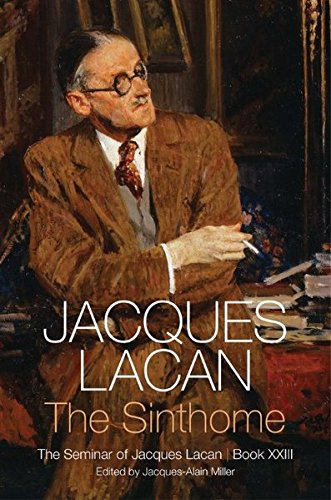
The Sinthome: The Seminar of Jacques Lacan: Book XXIII
"Ten times, an elderly grey-haired man gets up on the stage. Ten times puffing and sighing. Ten times slowly tracing out strange multi-coloured arabesques that interweave, curling with the meanders... (more)