




C.G. Jung
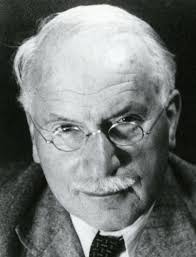
C. G. Jung (1875 - 1961) was a Swiss psychiatrist, innovative thinker and founder of Analytical Psychology, whose most influential ideas include the concept of psychological archetypes, the collective unconscious, and synchronicity. He is the author of numerous works, including Memories, Dreams, Reflections and Man and His Symbols.
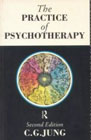
The Practice of Psychotherapy (Collected Works: Vol. 16)
The Practice of Psychotherapy brings together Jung's essays on general questions of analytic therapy and dream analysis. It also contains his profoundly interesting parallel between the transference... (more)
Jung on Alchemy
Presents a selection of Jung's writing on alchemy, a concise introduction to its principles and the importance of alchemy in the context of analytical psychology and the relevance of its symbolism to... (more)
Jung on Evil
This text brings together a key selection of Jung's writings on evil, a subject that became a central issue for him as he got older, to provide an accessible account of his thoughts on the subject,... (more)
Jung on Active Imagination
This work contains a selection of Jung's key writings on active imagination, showing how he developed the method over many years and came to realise its importance for achieving both self-knowledge... (more)
Answer to Job
Jung addresses the problem of how a good god can countenance the appalling evil apparent in the world. (more)
Modern Man in Search of a Soul
New edition in the 'Routledge Classics' series. 250 pages. (more)
Jung on Synchronicity and the Paranormal
Brings together a selection of Jung's work on the paranormal and synchronicity, from well known and less accessible sources. In a searching introduction the editor addresses all the main aspects of... (more)
Development of the Personality (Collected Works: Vol. 17)
Though Jung's main researches have centred on the subject of individuation as an adult ideal, he has a unique contribution to make to the psychology of childhood. Jung repeatedly underlined the... (more)

Psychogenesis of Mental Disease (Collected Works: Vol. 3)
A collection of Jung's writings on psychosis which together contain the seeds of his theoretical divergence from psychoanalysis and provide insights into the development of his later concepts such as... (more)
The Freud/Jung Letters: Complete Edition
The complete letters between Freud and Jung, discussing colleagues, strategies for advancing psychoanalysis, and their ultimate split.
Analytical Psychology in Exile: The Correspondence of C. G. Jung and Erich Neumann
C. G. Jung and Erich Neumann first met in 1933, at a seminar Jung was conducting in Berlin. Jung was fifty-seven years old and internationally acclaimed for his own brand of psychotherapy. Neumann,... (more)
Jung on Ignatius of Loyola’s Spiritual Exercises: Lectures Delivered at ETH Zurich, Volume 7: 1939–1940
Between 1933 and 1941, C. G. Jung delivered a series of public lectures at the Swiss Federal Institute of Technology (ETH) in Zurich. Intended for a general audience, these lectures addressed a broad... (more)
Consciousness and the Unconscious: Lectures Delivered at ETH Zurich, Volume 2: 1934
Between 1933 and 1941, C. G. Jung delivered a series of public lectures at the Swiss Federal Institute of Technology (ETH) in Zurich. Intended for a general audience, these lectures addressed a broad... (more)
On Dreams and the East: Notes of the 1933 Berlin Seminar
In the summer of 1933, C. G. Jung conducted a seminar in Berlin attended by a large audience of some 150 people, including several Jewish Jungians who would soon leave Germany. Hitler had begun... (more)
Psychology of Yoga and Meditation: Lectures Delivered at ETH Zurich, Volume 6: 1938–1940
Between 1933 and 1941, C. G. Jung delivered a series of public lectures at the Swiss Federal Institute of Technology (ETH) in Zurich. Intended for a general audience, these lectures addressed a broad... (more)
Dream Symbols of the Individuation Process: Notes of C. G. Jung's Seminars on Wolfgang Pauli's Dreams
In 1936 and 1937, C. G. Jung delivered two legendary seminars on dream interpretation, the first on Bailey Island, Maine, the second in New York City. Dream Symbols of the Individuation Process makes... (more)
The Active Imagination: Notes from the Seminar Given in 1931
In the fall of 1931, C. G. Jung gave an intensive series of seminars on the use of active imagination in clinical practice. Delivered at the Hotel Sonne in Zurich, these lectures describe a technique... (more)
Jung's Life and Work: Interviews for Memories, Dreams, Reflections with Aniela Jaffé
In 1957, at the age of eighty-one, C. G. Jung began a collaboration with his student and secretary Aniela Jaffé and the legendary publisher Kurt Wolff on a book about his life. Memories, Dreams,... (more)