



A Big and a Little One
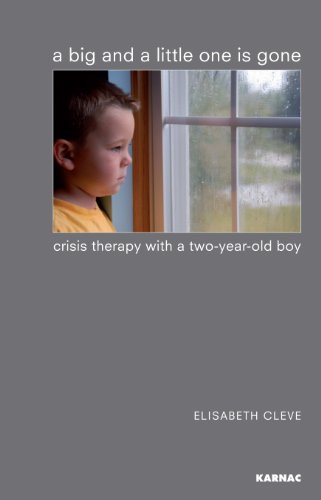
A Big and a Little One: Crisis Therapy with a Two-Year-Old Boy is a true story from inside the child psychotherapist's room, told in everyday language. Victor, who is two and a half years old, has lost his mother and a younger brother in a car accident. He is a "sunny" and "happy" little boy, and does not seem to miss them. Victor is a child in deep crisis and comes for a crisis therapy together with his father. The reader is invited to follow Victor for his fifteen treatment sessions. He shows through play and activities how he is followed and piloted through his grief by his psychotherapist Elisabeth Cleve. The healing by play therapy is depicted in words and pictures from the perspective of both patient and therapist. We get to learn about Victor's and his therapist's inner feelings, thoughts and actions during the different phases of the treatment. In spite of the tragic reasons for the therapy sessions A Big and a Little One is a story which brings lots of hope and courage.
Our interest in how to help people hit by a trauma has increased. Anxiousness in our time, global traumas such as terror attacks, natural disasters and the murder of politicians have shaken us deeply. Quick changes in our society lead to lack of time, stress and personal crisis. Tragedies such as traffic accidents and severe illnesses lead to different types of separations between children and family members. For a person hit by a personal loss it is important to find a set of "psychological tools" that will help him to work through the crisis and go on with his life. This is so for both adults and children. Some children, like little Victor in A Big and a Little One need help in crisis therapy to find bearable forms of expressing their grief through fantasizing and play with symbolic content.
No matter the cause of the death of a family member, the loss always hits a family with small children hard. The two concepts "love" and "leave" do not go together in the world of small children. It is impossible for them to form the thought that a family member has disappeared forever because fantasy and reality exist simultaneously in their world. However, in therapy the child must be slowly guided to use his imagination and capacity to play as a way of accepting reality. This is what crisis therapy for small children is about. Completed therapy will work as a link into a new future. In A Big and a Little One Victor shows how much easier it is to go on in life with healed scars than with open wounds.
Here are some examples from this fascinating book that exemplify Victor working through his grief:
Session 1. One of the first things Victor does is to put little horses on their heads in the sand tray. By not letting the horses stand on their feet, Victor shows his therapist how life looks to him. His life has suddenly been turned upside down, like for the horses.
Session 3. "Hold my daddy's hand" chants Victor in the middle of his play. He eagerly tells that his daddy needs help as well. Victor peeks very carefully at his father's therapist to see if he will do.
Session 5. Two empty little doll chairs stand alone without any dolls on them. Victor does not like these chairs. He illustrates in a symbolic way that two places have become empty at home. Later during the same session Victor buries a big and a little horse in the sand. His dad has been wondering if Victor understands that his mummy and little brother are gone. Victor shows here that he "knows" that a big and a little one have been buried.
Session 6. Victor is playing with animals on the floor. He sobs and talks to himself: "The first one is little brother to daddy bull. The giraffe is big brother, no, yes. The horse is little brother, no big brother. No, I do not know." It gives the impression of a small child trying so very hard to work through his confusion about his new family situation. Through his play he shows his therapist that he carries important and difficult questions. Is there a little brother now? Is Victor himself a big brother now? Does little brother have a dad any more?
Session 11. Victor tries to bury a big and a little ball. He has a hard time deciding whether to put a thick or a thin layer of sand over them. This gives the therapist the opportunity to talk about the possibility of remembering buried ones; if you see them and if you do not see them.
Session 13. Victor makes strong locks of clay for trucks so that nobody will fall out as they speed along. Victor reassures himself that there will never be another car accident. In his symbolic play he reassures himself of a safe future.
About the author
Elisabeth Cleve is a licensed psychologist and licensed psychotherapist for children and adolescents at the Erica Foundation in Stockholm, Sweden. She is a specialist in clinical psychology and the author of four books published in Sweden. One, From Chaos to Coherence: Psychotherapy with a Little Boy with ADHD, is translated into English (Karnac 2004, catalogue number 18551). A Big and a Little One is translated from Swedish into: Danish, Norwegian, Finnish, Czech and will soon be published in Arabic. In 2003 Elisabeth gave an interview on Norwegian radio about A Big and a Little One. It was awarded the best interview of the year in Norway. In 2004 Elisabeth was also awarded a prize by the Swedish Psychological Association for A Big and a Little One.
Our interest in how to help people hit by a trauma has increased. Anxiousness in our time, global traumas such as terror attacks, natural disasters and the murder of politicians have shaken us deeply. Quick changes in our society lead to lack of time, stress and personal crisis. Tragedies such as traffic accidents and severe illnesses lead to different types of separations between children and family members. For a person hit by a personal loss it is important to find a set of "psychological tools" that will help him to work through the crisis and go on with his life. This is so for both adults and children. Some children, like little Victor in A Big and a Little One need help in crisis therapy to find bearable forms of expressing their grief through fantasizing and play with symbolic content.
No matter the cause of the death of a family member, the loss always hits a family with small children hard. The two concepts "love" and "leave" do not go together in the world of small children. It is impossible for them to form the thought that a family member has disappeared forever because fantasy and reality exist simultaneously in their world. However, in therapy the child must be slowly guided to use his imagination and capacity to play as a way of accepting reality. This is what crisis therapy for small children is about. Completed therapy will work as a link into a new future. In A Big and a Little One Victor shows how much easier it is to go on in life with healed scars than with open wounds.
Here are some examples from this fascinating book that exemplify Victor working through his grief:
Session 1. One of the first things Victor does is to put little horses on their heads in the sand tray. By not letting the horses stand on their feet, Victor shows his therapist how life looks to him. His life has suddenly been turned upside down, like for the horses.
Session 3. "Hold my daddy's hand" chants Victor in the middle of his play. He eagerly tells that his daddy needs help as well. Victor peeks very carefully at his father's therapist to see if he will do.
Session 5. Two empty little doll chairs stand alone without any dolls on them. Victor does not like these chairs. He illustrates in a symbolic way that two places have become empty at home. Later during the same session Victor buries a big and a little horse in the sand. His dad has been wondering if Victor understands that his mummy and little brother are gone. Victor shows here that he "knows" that a big and a little one have been buried.
Session 6. Victor is playing with animals on the floor. He sobs and talks to himself: "The first one is little brother to daddy bull. The giraffe is big brother, no, yes. The horse is little brother, no big brother. No, I do not know." It gives the impression of a small child trying so very hard to work through his confusion about his new family situation. Through his play he shows his therapist that he carries important and difficult questions. Is there a little brother now? Is Victor himself a big brother now? Does little brother have a dad any more?
Session 11. Victor tries to bury a big and a little ball. He has a hard time deciding whether to put a thick or a thin layer of sand over them. This gives the therapist the opportunity to talk about the possibility of remembering buried ones; if you see them and if you do not see them.
Session 13. Victor makes strong locks of clay for trucks so that nobody will fall out as they speed along. Victor reassures himself that there will never be another car accident. In his symbolic play he reassures himself of a safe future.
About the author
Elisabeth Cleve is a licensed psychologist and licensed psychotherapist for children and adolescents at the Erica Foundation in Stockholm, Sweden. She is a specialist in clinical psychology and the author of four books published in Sweden. One, From Chaos to Coherence: Psychotherapy with a Little Boy with ADHD, is translated into English (Karnac 2004, catalogue number 18551). A Big and a Little One is translated from Swedish into: Danish, Norwegian, Finnish, Czech and will soon be published in Arabic. In 2003 Elisabeth gave an interview on Norwegian radio about A Big and a Little One. It was awarded the best interview of the year in Norway. In 2004 Elisabeth was also awarded a prize by the Swedish Psychological Association for A Big and a Little One.